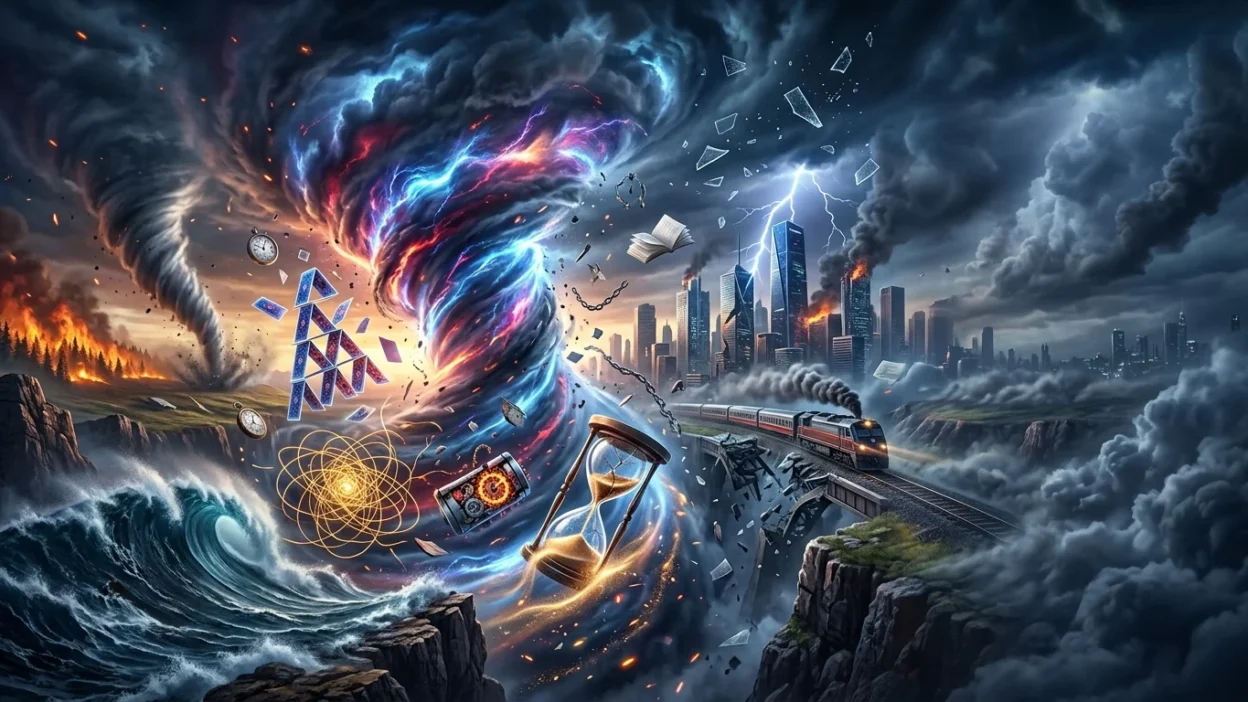
Chaos can describe confusion, disorder, unpredictability, destruction or overwhelming activity. Instead of simply saying something is chaotic, metaphors for chaos paint vivid mental images that capture the intensity of disorder. They make your writing more dramatic, emotional and memorable.
In this guide, you’ll discover 100+ metaphors for chaos, complete with meanings, examples, common mistakes, similar expressions, practice questions, FAQs and more. Whether you’re writing stories, speeches, essays, or improving your English, these metaphors will bring energy and depth to your writing.
Quick Answer
A metaphor for chaos directly describes confusion or disorder by saying something is another object or force without using “like” or “as.”
Some common examples include:
- A raging storm
- A tangled web
- A ticking time bomb
- A whirlwind
- A house of cards
What Are Metaphors for Chaos?
A metaphor is a figure of speech that directly compares two unrelated things without using like or as. Metaphors for chaos often symbolize confusion, instability, rapid change, conflict or loss of control.
For example:
The office was a raging storm.
This means the office was full of confusion and frantic activity.
100+ Metaphors for Chaos
| Metaphor | Meaning | Example |
|---|---|---|
| A raging storm | Intense disorder | The office was a raging storm. |
| A tangled web | Complicated confusion | The investigation became a tangled web. |
| A ticking time bomb | Trouble waiting to happen | The situation was a ticking time bomb. |
| A whirlwind | Fast-moving confusion | The event was a whirlwind. |
| A house of cards | Fragile situation | The company became a house of cards. |
| A battlefield | Constant conflict | The meeting was a battlefield. |
| A volcano | Explosive emotions | His anger was a volcano. |
| A wildfire | Rapidly spreading problems | The rumors became a wildfire. |
| A tornado | Total destruction | The argument was a tornado. |
| A maze | Difficult to navigate | The legal process was a maze. |
| A roller coaster | Emotional ups and downs | The week was a roller coaster. |
| A broken compass | No clear direction | Leadership became a broken compass. |
| A cracked mirror | Fragmented reality | His thoughts were a cracked mirror. |
| A collapsing bridge | Failing support | Trust became a collapsing bridge. |
| A spinning wheel | Endless activity | The office was a spinning wheel. |
| A thunderstorm | Sudden conflict | The discussion became a thunderstorm. |
| A sinking ship | Approaching failure | The project was a sinking ship. |
| A runaway train | Out of control | The crisis became a runaway train. |
| A broken clock | Disorder and inconsistency | The schedule was a broken clock. |
| A shattered puzzle | Confusing situation | The evidence was a shattered puzzle. |
| A boiling pot | Rising tension | The room was a boiling pot. |
| A cracked dam | Loss of control | His emotions became a cracked dam. |
| A flood | Overwhelming problems | Emails became a flood. |
| A jungle | Confusing environment | Bureaucracy was a jungle. |
| A thundercloud | Trouble approaching | The mood was a thundercloud. |
| A broken machine | Dysfunction | The system was a broken machine. |
| A collapsing tower | Rapid failure | Their plans became a collapsing tower. |
| A swarm | Overwhelming activity | The reporters were a swarm. |
| A spinning top | Constant movement | Life was a spinning top. |
| A broken puzzle | Missing pieces | The story was a broken puzzle. |
| A tangled forest | Hard to escape | The negotiations became a tangled forest. |
| A crashing wave | Sudden impact | The bad news was a crashing wave. |
| A crumbling wall | Falling apart | Their relationship became a crumbling wall. |
| A hurricane | Massive disruption | The financial crisis was a hurricane. |
| A wildfire of emotions | Rapid emotional spread | Fear became a wildfire of emotions. |
| A domino chain | One problem causing another | The mistake became a domino chain. |
| A black hole | Consumes everything | Debt became a black hole. |
| A broken orchestra | Complete disorder | The team was a broken orchestra. |
| A stormy sea | Constant uncertainty | Business was a stormy sea. |
| A buzzing hive | Frantic activity | The newsroom was a buzzing hive. |
| A collapsing staircase | Losing progress | The negotiations became a collapsing staircase. |
| A cloud of dust | Lack of clarity | The truth was a cloud of dust. |
| A shattered window | Broken stability | Peace became a shattered window. |
| A cracked foundation | Weak support | Their partnership was a cracked foundation. |
| A maze of shadows | Hidden confusion | Politics became a maze of shadows. |
| A firework explosion | Sudden disorder | The celebration became a firework explosion. |
| A chain reaction | Escalating problems | The misunderstanding became a chain reaction. |
| A roaring ocean | Powerful uncertainty | The economy was a roaring ocean. |
| A storm of voices | Loud confusion | The classroom became a storm of voices. |
| A battlefield of ideas | Fierce disagreement | The debate was a battlefield of ideas. |
Common Mistakes
- Don’t use “like” or “as” in metaphors.
- ❌ The meeting was like a battlefield.
- ✅ The meeting was a battlefield.
- Choose metaphors that fit the level of chaos.
- Use whirlwind for busyness and hurricane for major disruption.
- Avoid mixing too many metaphors.
- One strong metaphor is often more effective than several conflicting ones.
- Consider the tone.
- Dramatic metaphors suit fiction and speeches, while milder ones may fit business writing.
Similar Expressions
- In turmoil
- Out of control
- In disarray
- A complete mess
- Pandemonium
- Bedlam
- Mayhem
- Total confusion
- Disorder
- Uproar
- Turbulence
- Frenzy
- Havoc
- Anarchy
- Storm of activity
Practice Questions
Fill in the blanks.
- The office was a raging ________.
- The investigation became a tangled ________.
- The situation was a ticking time ________.
- The event was a ________.
- The company became a house of ________.
- The project was a sinking ________.
- Emails became a ________.
- Debt became a black ________.
- The classroom became a storm of ________.
- The debate was a battlefield of ________.
Answers
- storm
- web
- bomb
- whirlwind
- cards
- ship
- flood
- hole
- voices
- ideas
FAQs
What is a metaphor for chaos?
A metaphor for chaos directly compares disorder or confusion to another object or force, such as a raging storm or a tangled web, without using like or as.
What are common metaphors for chaos?
Popular examples include a whirlwind, a ticking time bomb, a battlefield, a wildfire, and a runaway train.
How is a metaphor different from a simile?
A metaphor makes a direct comparison (The office was a battlefield), while a simile uses like or as (The office was like a battlefield).
Are metaphors for chaos useful in writing?
Yes. They vividly express confusion, conflict, instability, and overwhelming situations, making stories, speeches, and essays more engaging.
Can I create my own metaphors for chaos?
Absolutely! Original metaphors can make your writing more unique, as long as they clearly convey disorder, unpredictability, or loss of control.
Conclusion
Metaphors for chaos help transform ordinary descriptions of confusion into powerful, memorable imagery. Whether you describe chaos as a raging storm, a tangled web, a runaway train or a wildfire, these metaphors capture the intensity and unpredictability of disorder.
Use them thoughtfully to make your writing more vivid, emotional and impactful.