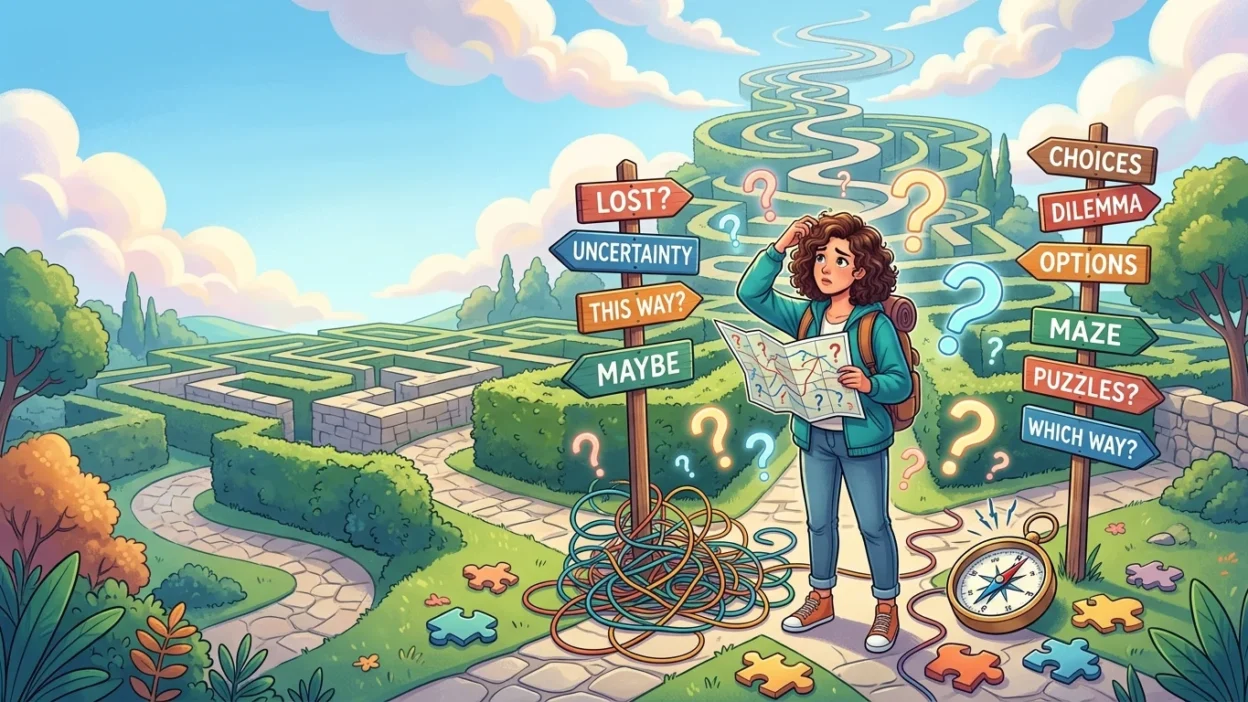
Everyone feels confused sometimes, whether it’s during a difficult lesson, while making a big decision or when facing an unexpected situation. Instead of repeating the word confused, writers often use similes to create vivid and memorable descriptions. A simile compares one thing to another using the words like or as making emotions easier for readers to imagine.
Whether you’re writing a story, essay, poem or simply improving your English, these similes for confused can help make your writing more engaging. In this article, you’ll discover 30 original similes for confused, complete with meanings and examples. You’ll also learn common mistakes, similar expressions, practice questions, FAQs and useful writing tips.
Quick Answer
Similes for confused compare confusion to something puzzling or uncertain using like or as. These figurative expressions make writing more descriptive and help readers clearly understand feelings of uncertainty, doubt or bewilderment.
30 Similes for Confused
| Simile | Meaning | Example |
|---|---|---|
| As confused as a lost puppy | Completely unsure | Mia looked as confused as a lost puppy during the lesson. |
| Like a traveler without a map | Lacking direction | He wandered through the project like a traveler without a map. |
| As puzzled as a cat watching a magic trick | Unable to understand | The children were as puzzled as a cat watching a magic trick. |
| Like a boat without a compass | Feeling directionless | She felt like a boat without a compass after hearing the news. |
| As mixed up as tangled headphones | Completely disorganized | My thoughts were as mixed up as tangled headphones. |
| Like a bird caught in a storm | Unsure what to do | He stood like a bird caught in a storm. |
| As uncertain as a shadow in the fog | Full of doubt | She seemed as uncertain as a shadow in the fog. |
| Like a puzzle with missing pieces | Incomplete understanding | His explanation was like a puzzle with missing pieces. |
| As bewildered as a deer in city traffic | Overwhelmed | The tourist looked as bewildered as a deer in city traffic. |
| Like a spinning top | Dizzy with confusion | My mind felt like a spinning top. |
| Simile | Meaning | Example |
|---|---|---|
| As confused as a fish out of water | Out of place | Ben felt as confused as a fish out of water on his first day. |
| Like a book with missing pages | Missing important information | The instructions were like a book with missing pages. |
| As lost as a balloon in the wind | Without direction | She was as lost as a balloon in the wind. |
| Like a maze with no exit | Unable to find a solution | The problem felt like a maze with no exit. |
| As puzzled as an owl in daylight | Facing something unusual | He looked as puzzled as an owl in daylight. |
| Like a cloud covering the sun | Thoughts becoming unclear | Her mind was like a cloud covering the sun. |
| As unsure as a beginner on ice skates | Lacking confidence | I felt as unsure as a beginner on ice skates. |
| Like leaves swirling in the wind | Thoughts all over the place | His ideas scattered like leaves swirling in the wind. |
| As baffled as a child reading a foreign language | Unable to understand | The student was as baffled as a child reading a foreign language. |
| Like a clock without hands | Unable to make sense | The plan seemed like a clock without hands. |
| Simile | Meaning | Example |
|---|---|---|
| As confused as a chicken in a library | Totally bewildered | He stood as confused as a chicken in a library. |
| Like smoke drifting in the air | Thoughts fading | Her ideas floated like smoke drifting in the air. |
| As uncertain as a paper boat on the ocean | Feeling insecure | I felt as uncertain as a paper boat on the ocean. |
| Like a compass pointing everywhere | Completely undecided | His mind was like a compass pointing everywhere. |
| As puzzled as someone solving a riddle | Thinking hard | She looked as puzzled as someone solving a riddle. |
| Like a butterfly trapped indoors | Restless and confused | He moved like a butterfly trapped indoors. |
| As lost as an echo in the mountains | Unable to find direction | They felt as lost as an echo in the mountains. |
| Like a broken GPS | Giving the wrong direction | My thoughts were like a broken GPS. |
| As confused as a squirrel in a snowstorm | Struggling to figure things out | The puppy looked as confused as a squirrel in a snowstorm. |
| Like a dream that makes no sense | Completely confusing | The conversation felt like a dream that makes no sense. |
Common Mistakes
- Using confusing comparisons that readers won’t understand.
- Mixing similes with metaphors.
- Overusing similes in every paragraph.
- Choosing comparisons that don’t match the situation.
- Forgetting to include like or as.
- Repeating the same simile too often.
Similar Expressions
- Bewildered
- Puzzled
- Perplexed
- Baffled
- Lost
- Uncertain
- Mixed up
- At a loss
- Scratching your head
- In a fog
Practice Questions
1. What is a simile?
Answer: A comparison using like or as.
2. Complete the simile: As confused as a lost ________.
Answer: Puppy.
3. Which simile describes feeling directionless?
Answer: Like a traveler without a map.
4. Is “My mind is a maze” a simile?
Answer: No. It is a metaphor.
5. Write a sentence using “like a puzzle with missing pieces.”
Answer: The instructions were like a puzzle with missing pieces.
6. Why do writers use similes?
Answer: To make descriptions more vivid and interesting.
7. Which words usually introduce a simile?
Answer: Like and as.
8. Name one similar expression for confused.
Answer: Bewildered.
9. True or False: Similes compare two different things.
Answer: True.
10. Can you create your own similes?
Answer: Yes. Original similes make writing more creative.
FAQs
What is a simile for confused?
A simile for confused compares confusion to another object or situation using like or as.
Why should I use similes for confused?
They make your writing more descriptive and help readers understand emotions more clearly.
Are similes part of figurative language?
Yes. Similes are one of the most common forms of figurative language.
Can students use similes in essays?
Yes. They improve descriptive and creative writing.
What’s the difference between a simile and a metaphor?
A simile uses like or as, while a metaphor makes a direct comparison.
Can I create my own similes?
Absolutely! Original similes make your writing more unique and engaging.
Conclusion
Using similes for confused is a great way to describe uncertainty, puzzlement and mixed emotions in a vivid and creative way. Rather than repeating the word confused, you can use imaginative comparisons that help readers picture exactly how someone feels. Whether you’re writing a story, essay or poem, these similes will make your descriptions more engaging and memorable. Practice using them naturally and don’t hesitate to create your own original comparisons to make your writing stand out.