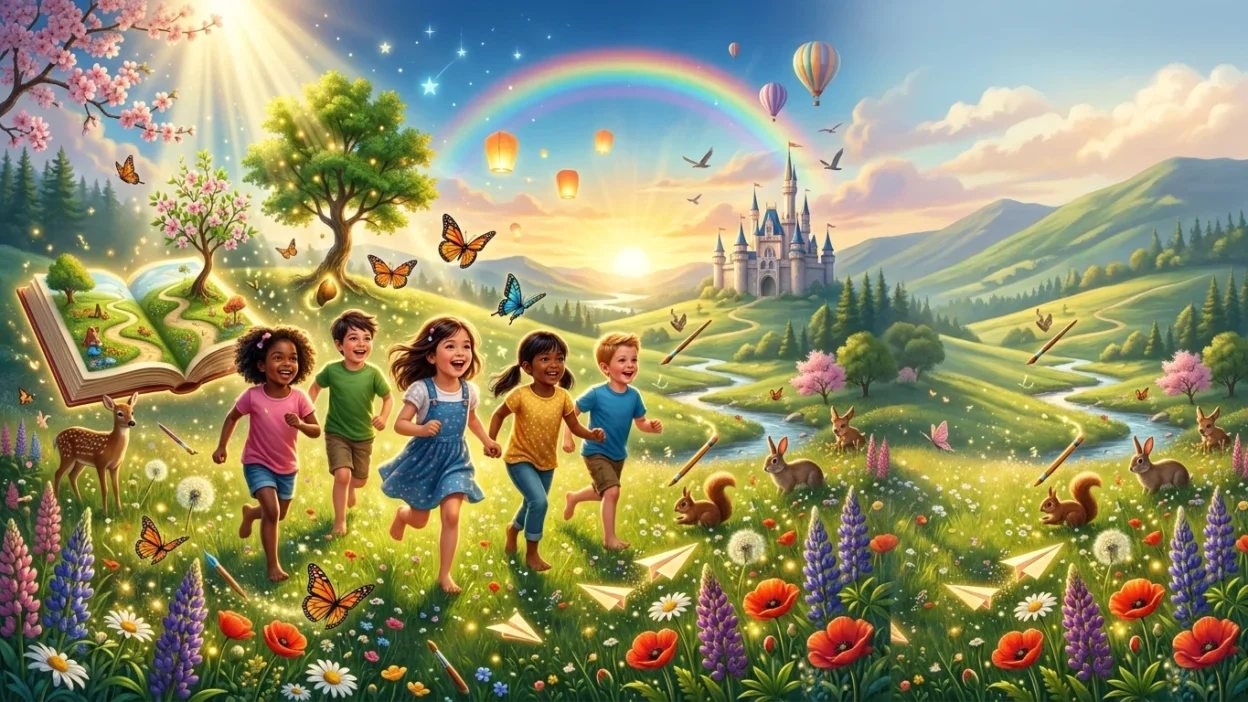
Children represent innocence, curiosity, hope, joy, growth and endless potential. Instead of simply describing children as playful or energetic, metaphors for children help create vivid and meaningful images that capture their unique qualities. These comparisons add warmth, emotion and creativity to your writing.
In this guide, you’ll discover 100+ metaphors for children, complete with meanings, examples, one comprehensive table, common mistakes, similar expressions, practice questions, FAQs and more. Whether you’re writing stories, poems, speeches or improving your English, these metaphors will make your writing more expressive.
Quick Answer
A metaphor for children directly compares children to another object, idea, or living thing without using “like” or “as.”
Some common examples include:
- Little rays of sunshine
- Seeds of tomorrow
- Blank canvases
- Tiny explorers
- Budding flowers
What Are Metaphors for Children?
A metaphor is a figure of speech that directly compares two unrelated things without using like or as. Metaphors for children often symbolize innocence, imagination, growth, learning, hope, and the future.
For example:
The children were little rays of sunshine.
This means the children brought happiness and warmth wherever they went.
100+ Metaphors for Children
| Metaphor | Meaning | Example |
|---|---|---|
| Little rays of sunshine | Bring happiness | The children were little rays of sunshine. |
| Seeds of tomorrow | Future potential | The students were seeds of tomorrow. |
| Blank canvases | Ready to learn | Young minds were blank canvases. |
| Tiny explorers | Curious and adventurous | The toddlers were tiny explorers. |
| Budding flowers | Growing beautifully | The children were budding flowers. |
| Bright stars | Full of promise | Every child was a bright star. |
| Little sponges | Absorb knowledge quickly | The preschoolers were little sponges. |
| Fresh pages | New beginnings | Every newborn was a fresh page. |
| Tiny miracles | Precious gifts | The babies were tiny miracles. |
| Young saplings | Growing stronger | The children were young saplings. |
| Hidden treasures | Extremely valuable | Every child was a hidden treasure. |
| Morning dew | Freshness and purity | The toddlers were morning dew. |
| Little dreamers | Imaginative | The kids were little dreamers. |
| Colorful butterflies | Joyful transformation | The children became colorful butterflies. |
| Shining gems | Precious individuals | The students were shining gems. |
| Tiny sparks | Full of energy | The toddlers were tiny sparks. |
| Open books | Ready to discover | Young minds were open books. |
| Garden blossoms | Beauty and growth | The children were garden blossoms. |
| Little adventurers | Love discovering | The campers were little adventurers. |
| Young eagles | Learning to soar | The students were young eagles. |
| Tiny rainbows | Bring happiness | The babies were tiny rainbows. |
| Seeds in spring | Full of promise | The children were seeds in spring. |
| Gentle breezes | Peaceful presence | The infants were gentle breezes. |
| Little composers | Creative minds | The children were little composers. |
| Shining lanterns | Bring hope | The children became shining lanterns. |
| Tiny gardeners | Growing kindness | The kids were tiny gardeners. |
| Morning birds | Full of energy | The children were morning birds. |
| Living poems | Beautiful souls | Every child was a living poem. |
| Small miracles | Wonderful gifts | The newborns were small miracles. |
| Tiny architects | Building dreams | The children were tiny architects. |
| Hopeful horizons | Bright futures | The children were hopeful horizons. |
| Dancing leaves | Playful movement | The toddlers were dancing leaves. |
| Little inventors | Creative thinkers | The students were little inventors. |
| Glowing candles | Spread warmth | The children were glowing candles. |
| Tiny rivers | Constant growth | The kids were tiny rivers. |
| Pocket-sized heroes | Brave and kind | The children were pocket-sized heroes. |
| Bright comets | Full of energy | The kids were bright comets. |
| Curious kittens | Love learning | The toddlers were curious kittens. |
| Tiny musicians | Natural rhythm | The children were tiny musicians. |
| Blossoming gardens | Growing together | The classroom was a blossoming garden. |
| Little beacons | Sources of hope | The children became little beacons. |
| Colorful balloons | Joyful spirits | The kids were colorful balloons. |
| Young phoenixes | Rising through challenges | The children were young phoenixes. |
| Tiny oceans | Deep emotions | Every child was a tiny ocean. |
| Golden keys | Unlock the future | The children were golden keys. |
| Little storytellers | Rich imagination | The kids were little storytellers. |
| Gentle waves | Calm growth | The children were gentle waves. |
| Bright fireworks | Bursting with excitement | The children were bright fireworks. |
| Tiny forests | Growing together | The classroom was a tiny forest. |
| Living rainbows | Diversity and joy | The children were living rainbows. |
| Future architects | Builders of tomorrow | The students were future architects. |
Common Mistakes
- Don’t use “like” or “as” in metaphors.
- ❌ The children were like little stars.
- ✅ The children were bright stars.
- Choose positive metaphors that match the context.
- Use seeds of tomorrow for potential and little sponges for learning.
- Avoid mixing unrelated metaphors.
- Keep one consistent image in a sentence or paragraph.
- Consider your audience.
- Warm, hopeful metaphors work best in educational, parenting, and inspirational writing.
Similar Expressions
- The future generation
- Bundle of joy
- Bright young minds
- Rising stars
- Little learners
- Young hearts
- Future leaders
- Growing minds
- Innocent souls
- Little blessings
- Tomorrow’s hope
- Young dreamers
- Precious gifts
- Curious minds
- Blossoming youth
Practice Questions
Fill in the blanks.
- The children were little rays of ________.
- The students were seeds of ________.
- Young minds were blank ________.
- The toddlers were tiny ________.
- Every child was a bright ________.
- The preschoolers were little ________.
- Every newborn was a fresh ________.
- The children were budding ________.
- The classroom was a blossoming ________.
- The students were future ________.
Answers
- sunshine
- tomorrow
- canvases
- explorers
- star
- sponges
- page
- flowers
- garden
- architects
FAQs
What is a metaphor for children?
A metaphor for children directly compares children to another object or idea, such as little rays of sunshine or seeds of tomorrow, without using like or as.
What are common metaphors for children?
Popular examples include blank canvases, tiny explorers, budding flowers, bright stars, and little sponges.
How is a metaphor different from a simile?
A metaphor makes a direct comparison (The children were bright stars), while a simile uses like or as (The children were like bright stars).
Are metaphors for children useful in writing?
Yes. They add warmth, emotion, and vivid imagery to essays, speeches, poems, stories, and educational content.
Can I create my own metaphors for children?
Absolutely! Original metaphors can make your writing more meaningful, provided they clearly express innocence, growth, hope, or imagination.
Conclusion
Metaphors for children celebrate the wonder, curiosity, and limitless potential of young minds. Whether you describe children as little rays of sunshine, seeds of tomorrow, tiny explorers, or bright stars, these metaphors create memorable imagery that inspires readers.
Use them to add warmth, creativity, and emotional depth to your stories, speeches, poems, and everyday writing.

Logan Liam is the administrator of SmiliesHive, managing educational content about idioms, metaphors, and similes while ensuring clear, accurate, engaging, and beginner-friendly language resources for readers worldwide.