The word Wild is often used to describe someone acting in a silly, unusual, excited or unpredictable way. It can also describe situations that are chaotic or surprising. Instead of repeating the word wild, writers use similes to create stronger and more colorful descriptions. A simile compares two things using like or as helping readers imagine the behavior or situation more clearly.
Whether you’re writing a story, poem, essay or simply improving your English, these similes for wild will add creativity to your writing. In this article, you’ll discover 30 original similes for wild, along with meanings and examples. You’ll also find common mistakes, similar expressions, practice questions, FAQs and a conclusion to help you use these figurative expressions naturally.
Quick Answer
Similes for wild compare someone’s behavior or a situation to something wild, chaotic, or unusual using like or as. These comparisons make your writing more vivid, humorous, and engaging while avoiding repetition.
30 Similes for Wild
| Simile | Meaning | Example |
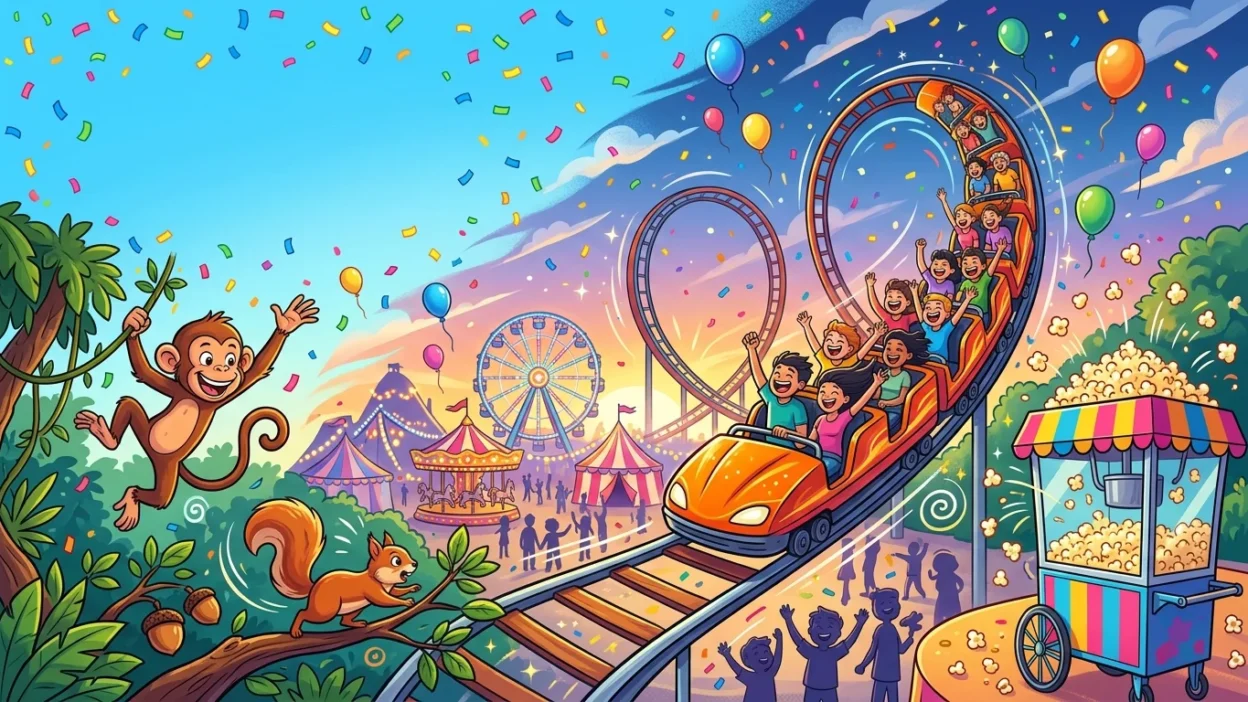
| As wild as a squirrel chasing its tail | Acting in a silly way | The puppy was as wild as a squirrel chasing its tail. |
| Like popcorn popping in a pan | Full of restless energy | The children ran around like popcorn popping in a pan. |
| As wild as a roller coaster | Full of unexpected twists | My weekend was as wild as a roller coaster. |
| Like a monkey swinging through trees | Wild and playful | He climbed the playground like a monkey swinging through trees. |
| As wild as fireworks on New Year’s Eve | Loud and exciting | The celebration became as wild as fireworks on New Year’s Eve. |
| Like a whirlwind in a room | Creating chaos | The toddlers rushed in like a whirlwind in a room. |
| As wild as a chicken chasing butterflies | Funny and unpredictable | Jake danced as wild as a chicken chasing butterflies. |
| Like confetti in the wind | Moving everywhere | The papers flew like confetti in the wind. |
| As wild as a bouncing kangaroo | Full of energy | The kids were as wild as a bouncing kangaroo. |
| Like a spinning carnival ride | Dizzy and chaotic | My thoughts felt like a spinning carnival ride. |
| Simile | Meaning | Example |
| As wild as a room full of balloons | Lively and noisy | The birthday party was as wild as a room full of balloons. |
| Like bees buzzing around a hive | Busy and energetic | The office was like bees buzzing around a hive. |
| As wild as dancing in the rain | Joyfully carefree | They laughed as wild as dancing in the rain. |
| Like leaves swirling in a storm | Completely out of control | The crowd scattered like leaves swirling in a storm. |
| As wild as a puppy seeing snow | Excited beyond control | Max was as wild as a puppy seeing snow. |
| Like a tornado of laughter | Full of excitement | The classroom became like a tornado of laughter. |
| As wild as a drummer at a parade | Loud and energetic | The band played as wild as a drummer at a parade. |
| Like marbles rolling across the floor | Moving in every direction | The children ran like marbles rolling across the floor. |
| As wild as a kite in a strong wind | Hard to control | The umbrella flew as wild as a kite in a strong wind. |
| Like a pinball bouncing everywhere | Constant movement | His ideas bounced like a pinball bouncing everywhere. |
| Simile | Meaning | Example |
| As wild as a carnival at night | Bright, noisy, and exciting | The festival was as wild as a carnival at night. |
| Like a flock of birds taking flight | Sudden excitement | The students rushed outside like a flock of birds taking flight. |
| As wild as bubbles in boiling water | Constant activity | The kitchen was as wild as bubbles in boiling water. |
| Like a race car on the final lap | Fast and thrilling | The game ended like a race car on the final lap. |
| As wild as popcorn at the movies | Fun and energetic | The children were as wild as popcorn at the movies. |
| Like a storm of confetti | Cheerful chaos | The celebration exploded like a storm of confetti. |
| As wild as a goat climbing rocks | Fearlessly playful | The little boy was as wild as a goat climbing rocks. |
| Like a bouncing beach ball | Full of lively movement | She skipped like a bouncing beach ball. |
| As wild as a parade of clowns | Funny and chaotic | The school play turned as wild as a parade of clowns. |
| Like a sparkler on a summer night | Bursting with energy | The crowd cheered like a sparkler on a summer night. |
Common Mistakes
- Using wild to describe real mental health conditions.
- Choosing offensive or disrespectful comparisons.
- Confusing similes with metaphors.
- Using too many similes in one paragraph.
- Forgetting to use like or as.
- Repeating the same simile throughout your writing.
Similar Expressions
- Wild as the wind
- Out of control
- Full of energy
- Acting goofy
- Off the wall
- All over the place
- Bursting with excitement
- Lively and playful
- Unpredictable
- Chaotic
Practice Questions
1. What is a simile?
Answer: A comparison using like or as.
2. Complete the simile: As wild as a ________ chasing its tail.
Answer: Squirrel.
3. Which simile describes cheerful chaos?
Answer: Like a storm of confetti.
4. Is “Life is a roller coaster” a simile?
Answer: No. It is a metaphor.
5. Write a sentence using “like popcorn popping in a pan.”
Answer: The excited children jumped around like popcorn popping in a pan.
6. Why do writers use similes?
Answer: To make descriptions more vivid and interesting.
7. Which words usually introduce a simile?
Answer: Like and as.
8. Name one similar expression for wild.
Answer: Off the wall.
9. True or False: Similes compare two different things.
Answer: True.
10. Can you create your own similes?
Answer: Yes. Original similes make writing more creative.
FAQs
What are similes for wild?
They compare wild, unusual, or energetic behavior to another object or action using like or as.
Why should I use similes instead of repeating “Wild”?
They make your writing more descriptive, engaging, and varied.
Are similes part of figurative language?
Yes. Similes are one of the most common literary devices.
Can students use these similes in creative writing?
Yes. They are great for stories, poems, and descriptive essays.
What’s the difference between a simile and a metaphor?
A simile uses like or as, while a metaphor makes a direct comparison.
Should I avoid using “wild” for mental health conditions?
Yes. It’s better to use respectful and accurate language when discussing mental health.
Conclusion
Using similes for wild is a fun way to describe energetic, unpredictable, or chaotic people and situations. Instead of repeating the word wild, these creative comparisons help readers picture the action more clearly and make your writing more enjoyable. Remember to use them in appropriate contexts, avoid insensitive language and experiment with your own original similes to make your stories and descriptions stand out.