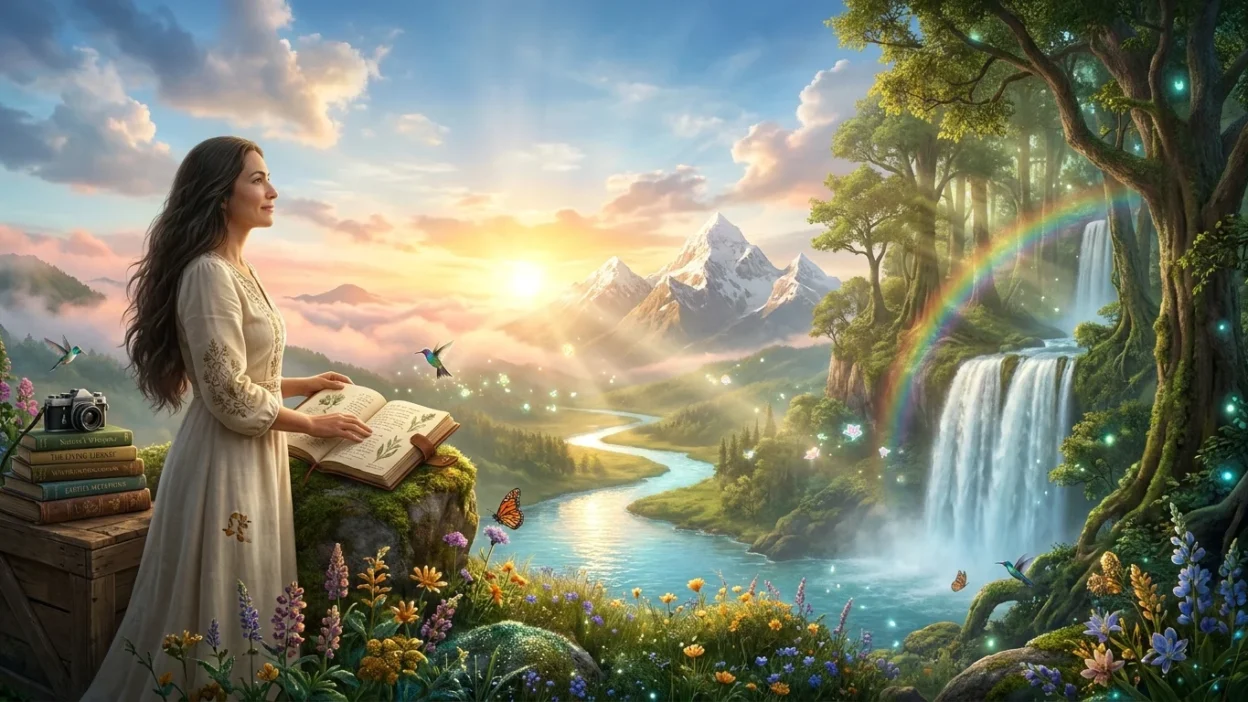
Nature is full of beauty, mystery and wonder. From towering mountains to flowing rivers, every part of nature can inspire powerful images and emotions. Writers use metaphors to describe these natural wonders in creative ways that help readers imagine and feel the world around them.
Nature can be a healing hand, a living library, a green blanket, a sparkling jewel or a peaceful sanctuary. These comparisons make ordinary descriptions more interesting and help you express ideas about beauty, life, growth, peace, and change.
Quick Answer
Metaphors for nature compare the natural world to something else to describe its beauty, strength, energy, or meaning. Examples include “nature is a teacher,” “the forest is a green cathedral,” “the river is a silver ribbon,” “the sun is a golden lamp,” and “the earth is our mother.”
105 Metaphors for Nature
| # | Metaphor | Meaning | Example Sentence |
|---|---|---|---|
| 1 | Nature is a teacher. | Nature teaches us lessons about life. | Nature is a teacher that shows us the value of patience. |
| 2 | Nature is a mother. | Nature provides care and support. | Nature is a mother that feeds and protects her children. |
| 3 | Nature is a healer. | Nature can offer peace and comfort. | The quiet forest was a healer for her tired mind. |
| 4 | Nature is a sanctuary. | Nature is a peaceful place of refuge. | The green valley was a sanctuary from the busy city. |
| 5 | Nature is a treasure chest. | Nature contains many valuable wonders. | The rainforest was a treasure chest of life. |
| 6 | Nature is a living library. | Nature holds knowledge and history. | The ancient forest was a living library of stories. |
| 7 | Nature is a painting. | Nature creates beautiful scenes. | The sunset was a painting spread across the sky. |
| 8 | Nature is a masterpiece. | Nature is a work of great beauty. | The mountain valley was a masterpiece of the natural world. |
| 9 | Nature is a symphony. | Nature combines many sounds into harmony. | The forest was a symphony of birds, wind, and rustling leaves. |
| 10 | Nature is a song. | Nature creates beautiful sounds and feelings. | The waterfall was a song flowing through the valley. |
| 11 | Nature is a poem. | Nature expresses beauty through its details. | The garden was a poem written in flowers. |
| 12 | Nature is a book. | Nature tells stories about the world. | Every tree was a page in nature’s book. |
| 13 | Nature is a mirror. | Nature can reflect our emotions. | The calm lake was a mirror of her peaceful heart. |
| 14 | Nature is a dream. | Nature can feel magical and wonderful. | The misty meadow was a dream beneath the morning sky. |
| 15 | Nature is a playground. | Nature offers opportunities for exploration. | The woodland was a playground for curious children. |
| 16 | Nature is a garden of life. | Nature supports many forms of life. | The wetlands were a garden of life filled with birds and plants. |
| 17 | Nature is a web of life. | Living things depend on one another. | The rainforest is a web of life where every creature matters. |
| 18 | Nature is a heartbeat. | Nature has a continuous rhythm and energy. | The flowing river was the heartbeat of the valley. |
| 19 | Nature is a breathing giant. | Nature is powerful and always changing. | The breathing giant woke with the first light of dawn. |
| 20 | Nature is a sleeping giant. | Nature can appear quiet but powerful. | The mountains looked like a sleeping giant beneath the snow. |
| 21 | The earth is a mother. | Earth provides resources and supports life. | The earth is a mother whose gifts sustain us. |
| 22 | The sky is a blue blanket. | The sky covers the world like a blanket. | A blue blanket stretched across the countryside. |
| 23 | The sun is a golden lamp. | The sun lights the world. | The golden lamp brightened the sleepy village. |
| 24 | The sun is a fiery king. | The sun dominates the daytime sky. | The fiery king rose above the hills. |
| 25 | The sun is a golden coin. | The sun appears round and bright. | A golden coin floated above the horizon. |
| 26 | The moon is a silver lantern. | The moon lights the darkness. | A silver lantern guided us through the quiet night. |
| 27 | The moon is a night queen. | The moon appears majestic in the night sky. | The night queen watched over the sleeping earth. |
| 28 | The stars are diamonds. | Stars shine like precious jewels. | Diamonds glittered across the velvet sky. |
| 29 | The stars are tiny candles. | Stars appear as small points of light. | Tiny candles flickered in the darkness above us. |
| 30 | Clouds are cotton castles. | Clouds can look soft and enormous. | Cotton castles drifted across the blue sky. |
| 31 | Clouds are sky ships. | Clouds move across the sky like ships. | White sky ships sailed over the mountains. |
| 32 | Rain is nature’s music. | Rain creates soothing sounds. | Nature’s music tapped gently on the roof. |
| 33 | Rain is a silver curtain. | Rain forms a veil across the landscape. | A silver curtain fell over the garden. |
| 34 | Rain is the sky’s tears. | Rain can symbolize sadness or release. | The sky’s tears washed the dust from the leaves. |
| 35 | Lightning is a sword of fire. | Lightning is bright, sudden, and powerful. | A sword of fire split the storm clouds. |
| 36 | Thunder is the voice of the sky. | Thunder sounds like a powerful voice. | The voice of the sky rumbled across the hills. |
| 37 | Wind is an invisible dancer. | Wind moves freely through nature. | The invisible dancer swayed the branches. |
| 38 | Wind is nature’s breath. | Wind represents nature’s movement and energy. | Nature’s breath swept through the open fields. |
| 39 | A breeze is a gentle whisper. | A breeze is soft and quiet. | A gentle whisper brushed her cheek. |
| 40 | The ocean is a blue giant. | The ocean is vast and powerful. | The blue giant roared against the shore. |
| 41 | The ocean is a bottomless treasure chest. | The ocean contains hidden wonders. | The bottomless treasure chest held colorful coral and marine life. |
| 42 | The sea is a restless beast. | The sea can be wild and powerful. | The restless beast crashed against the cliffs. |
| 43 | Waves are white horses. | Waves can resemble galloping horses. | White horses raced toward the beach. |
| 44 | The river is a silver ribbon. | A river winds through the landscape. | A silver ribbon curled between the green hills. |
| 45 | The river is a road of water. | A river provides a path through nature. | The road of water carried leaves toward the sea. |
| 46 | A waterfall is nature’s curtain. | A waterfall creates a falling sheet of water. | Nature’s curtain shimmered in the afternoon sunlight. |
| 47 | A lake is a mirror of the sky. | A lake reflects the sky above it. | The mirror of the sky held the clouds in its still water. |
| 48 | A pond is a jewel of the meadow. | A pond adds beauty to a natural area. | The jewel of the meadow sparkled among the wildflowers. |
| 49 | Mountains are the guardians of the earth. | Mountains seem strong and protective. | The guardians of the earth stood watch over the village. |
| 50 | Mountains are stone giants. | Mountains appear enormous and powerful. | Stone giants rose above the misty valley. |
| 51 | Mountains are the earth’s crown. | Mountains are majestic features of the landscape. | Snow covered the earth’s crown in sparkling white. |
| 52 | A mountain peak is a staircase to the sky. | A peak rises high above the ground. | The rocky peak was a staircase to the sky. |
| 53 | Hills are green waves. | Hills rise and fall like waves. | Green waves rolled across the countryside. |
| 54 | A valley is nature’s cradle. | A valley shelters the land within it. | Nature’s cradle held a peaceful village. |
| 55 | A cliff is a stone wall. | A cliff forms a steep natural barrier. | A stone wall rose above the crashing sea. |
| 56 | A cave is the earth’s bedroom. | A cave offers a dark, sheltered space. | The bear rested in the earth’s bedroom. |
| 57 | A forest is a green cathedral. | A forest feels grand and peaceful. | Sunlight streamed through the green cathedral. |
| 58 | A forest is a sea of green. | A forest stretches across the land. | We walked through a sea of green trees. |
| 59 | Trees are the lungs of the earth. | Trees help maintain healthy air and ecosystems. | The lungs of the earth stood tall along the road. |
| 60 | Trees are nature’s skyscrapers. | Trees rise high above the ground. | Nature’s skyscrapers reached toward the clouds. |
| 61 | Tree branches are nature’s arms. | Branches spread outward like arms. | Nature’s arms stretched over the garden path. |
| 62 | Roots are nature’s anchors. | Roots hold plants firmly in the ground. | The tree’s anchors kept it steady during the storm. |
| 63 | Leaves are green coins. | Leaves can look like small coins. | Green coins shimmered in the sunlight. |
| 64 | Flowers are nature’s smiles. | Flowers bring beauty and happiness. | Nature’s smiles brightened the roadside. |
| 65 | Flowers are jewels of the garden. | Flowers are precious parts of a garden. | The roses were jewels among the green leaves. |
| 66 | A flower is a colorful flame. | A flower can look bright and vivid. | A red tulip stood like a colorful flame in the field. |
| 67 | Grass is the earth’s green carpet. | Grass covers the ground like carpet. | The earth’s green carpet stretched beneath our feet. |
| 68 | Moss is nature’s velvet. | Moss creates a soft, green covering. | Nature’s velvet covered the old stone wall. |
| 69 | A seed is a tiny promise. | A seed holds the possibility of growth. | Every seed was a tiny promise of spring. |
| 70 | A garden is a living rainbow. | A garden contains many colors. | The living rainbow bloomed after the rain. |
| 71 | Spring is nature’s awakening. | Spring represents renewal and growth. | Nature’s awakening filled the garden with flowers. |
| 72 | Summer is a golden blanket. | Summer brings warmth and sunlight. | A golden blanket covered the fields in afternoon light. |
| 73 | Autumn is a painter. | Autumn changes the colors of leaves. | The painter covered the forest in red and gold. |
| 74 | Winter is a white kingdom. | Winter creates a snowy landscape. | The white kingdom rested beneath the pale sun. |
| 75 | Snow is a white quilt. | Snow covers the land like a quilt. | A white quilt softened the fields and rooftops. |
| 76 | Frost is winter’s lace. | Frost forms delicate patterns. | Winter’s lace decorated the window. |
| 77 | A rainbow is a bridge of colors. | A rainbow arches across the sky. | A bridge of colors appeared after the storm. |
| 78 | A meadow is a sea of flowers. | A meadow can be filled with blooms. | We wandered through a sea of flowers. |
| 79 | A desert is an ocean of sand. | A desert stretches like a vast sea. | The ocean of sand glowed beneath the sun. |
| 80 | A desert dune is a golden wave. | A dune rises and falls like a wave. | Golden waves rolled across the desert. |
| 81 | A glacier is a frozen river. | A glacier moves slowly across land. | The frozen river carved its way through the mountains. |
| 82 | Ice is nature’s glass. | Ice can be clear and reflective. | Nature’s glass glittered along the pond’s edge. |
| 83 | A volcano is the earth’s furnace. | A volcano releases intense heat and energy. | The earth’s furnace glowed beneath the dark sky. |
| 84 | Lava is a river of fire. | Lava flows like burning liquid. | A river of fire crept down the volcanic slope. |
| 85 | A storm is nature’s drum. | A storm produces powerful sounds. | Nature’s drum shook the windows through the night. |
| 86 | Fog is a gray blanket. | Fog covers the landscape and reduces visibility. | A gray blanket wrapped around the village. |
| 87 | Dew is morning’s jewelry. | Dewdrops sparkle on plants. | Morning’s jewelry glittered on the blades of grass. |
| 88 | A bird’s song is nature’s alarm clock. | Birds often signal the beginning of a day. | Nature’s alarm clock woke us before sunrise. |
| 89 | Birds are messengers of the sky. | Birds symbolize freedom and movement. | Messengers of the sky crossed the morning clouds. |
| 90 | Butterflies are flying flowers. | Butterflies have colorful, delicate beauty. | Flying flowers danced above the meadow. |
| 91 | Bees are golden workers. | Bees work tirelessly among flowers. | Golden workers hurried between the blossoms. |
| 92 | A deer is a forest shadow. | A deer can move quietly through trees. | A forest shadow slipped between the trunks. |
| 93 | Fireflies are tiny stars. | Fireflies shine like stars near the ground. | Tiny stars flickered above the summer grass. |
| 94 | A spiderweb is nature’s lace. | A spiderweb forms a delicate pattern. | Nature’s lace sparkled with morning dew. |
| 95 | A seashell is the ocean’s memory. | A shell reminds us of the sea. | The ocean’s memory rested in her palm. |
| 96 | A rock is the earth’s memory. | Rocks preserve traces of the past. | The earth’s memory lay embedded in the ancient cliff. |
| 97 | A fossil is a time capsule. | A fossil preserves evidence of ancient life. | The fossil was a time capsule from a distant age. |
| 98 | The horizon is the earth’s meeting line. | The horizon appears to join sky and land or sea. | The meeting line glowed orange at sunset. |
| 99 | A sunrise is a golden promise. | Sunrise represents hope and new beginnings. | The golden promise appeared above the hills. |
| 100 | A sunset is the sky’s farewell. | Sunset marks the end of the day. | The sky’s farewell painted the clouds pink. |
| 101 | Nature is a bridge between life and wonder. | Nature connects us with the world’s beauty. | The forest became a bridge between everyday life and wonder. |
| 102 | Nature is a treasure map. | Nature invites exploration and discovery. | Every trail was a clue on nature’s treasure map. |
| 103 | Nature is a classroom without walls. | Nature offers endless learning opportunities. | The wetlands were a classroom without walls for the children. |
| 104 | Nature is a bank of memories. | Natural places can hold personal memories. | The old oak was a bank of memories from our childhood. |
| 105 | Nature is the world’s living heartbeat. | Nature sustains life and moves through constant cycles. | The forest, river, and sky formed the world’s living heartbeat. |
How to Use Metaphors for Nature
Nature metaphors can make your writing more vivid by helping readers imagine what a scene looks, sounds, or feels like.
Instead of writing:
The forest was beautiful.
You can write:
The forest was a green cathedral filled with golden sunlight.
Instead of writing:
The river moved through the valley.
You can write:
A silver ribbon wound its way through the valley.
Instead of writing:
The flowers made the garden colorful.
You can write:
A living rainbow bloomed across the garden.
These comparisons are useful in creative writing, poetry, essays, stories, travel descriptions, speeches, and nature writing. Choose a metaphor that matches the mood you want to create, whether it is peaceful, mysterious, powerful, joyful or sad.
Common Mistakes When Using Metaphors for Nature
1. Mixing too many metaphors
Avoid combining unrelated comparisons in a single sentence.
Weak: The forest was a sea, a spaceship, a blanket and a golden clock.
Better: The forest was a sea of green stretching toward the mountains.
2. Confusing metaphors with similes
A metaphor directly compares two things, while a simile usually uses like or as.
- Metaphor: The river is a silver ribbon.
- Simile: The river shines like a silver ribbon.
Both can be effective, but they create comparisons in different ways.
3. Using metaphors that do not match the mood
Choose images that fit the scene. A green cathedral suggests peace and wonder, while a restless beast suggests danger and power.
4. Using only familiar comparisons
Common expressions can work well, but original details make descriptions more memorable. Instead of only calling flowers beautiful, describe them as little lanterns lighting the garden.
5. Making the meaning unclear
A metaphor should help the reader imagine something, not confuse them. Choose comparisons that make sense in the context of your sentence.
Similar Expressions for Nature
Here are some related expressions you can use in creative writing:
- The beauty of the natural world
- Nature’s healing touch
- A breath of fresh air
- The voice of the wilderness
- The heart of the forest
- The rhythm of the earth
- A blanket of snow
- A sea of green
- A river of memories
- The colors of life
- The song of the birds
- Nature’s gentle embrace
- The roots of life
- The dance of the leaves
- A golden sunrise
- A silver moon
- The earth’s green heart
- The whisper of the wind
- A garden of wonders
- The pulse of the planet
10 Practice Questions About Metaphors for Nature
1. Which metaphor describes trees as important for the earth’s air?
A. Trees are the lungs of the earth.
Answer: A. Trees are the lungs of the earth.
2. Complete the sentence:
“The river was a silver ______ winding through the valley.”
Answer: ribbon
3. What does “nature is a teacher” mean?
Answer: It means nature can help us learn about life, patience, growth, and the world around us.
4. Which metaphor describes a forest as a peaceful and grand place?
A. A restless beast
B. A green cathedral
C. A fiery sword
Answer: B. A green cathedral
5. Complete the sentence:
“The flowers were nature’s ______, bringing joy to the garden.”
Answer: smiles
6. What does “the moon is a silver lantern” suggest?
Answer: It suggests that the moon lights up the night like a lantern.
7. Which metaphor represents a seed’s potential for growth?
A. A tiny promise
B. A gray blanket
C. A stone wall
Answer: A. A tiny promise
8. Write a sentence using “nature is a symphony.”
Answer: Nature was a symphony of birdsong, flowing water, and whispering leaves.
9. Which metaphor describes a rainbow?
A. A bridge of colors
B. A frozen river
C. A green carpet
Answer: A. A bridge of colors
10. Complete the sentence:
“The forest was a living ______ filled with stories of the natural world.”
Answer: library
FAQs About Metaphors for Nature
What is a metaphor for nature?
A metaphor for nature compares the natural world or one of its parts to something else. For example, “The forest is a green cathedral” compares a forest to a grand, peaceful building.
What is a beautiful metaphor for nature?
“Nature is a painting created by the earth” is a beautiful metaphor because it presents landscapes, colors and natural details as works of art.
What is a metaphor for the beauty of nature?
“Nature is a masterpiece” is a simple and effective metaphor for the beauty and variety of the natural world.
What is a metaphor for nature’s power?
“Nature is a sleeping giant” suggests that nature is powerful even when it appears quiet.
What is a metaphor for nature’s healing power?
“Nature is a healer” describes how natural places can offer comfort, calm and a sense of renewal.
What is a metaphor for a forest?
A forest can be described as a green cathedral, a sea of green, a living library, or the lungs of the earth.
What is a metaphor for a river?
A river can be called a silver ribbon, a road of water, or the heartbeat of the valley.
What is a metaphor for the sky?
The sky can be described as a blue blanket, a vast canvas, or a home for the stars.
Why do writers use metaphors for nature?
Writers use nature metaphors to create vivid mental pictures, express emotions, and help readers connect with natural scenes. They also make descriptions more memorable.
Can I use nature metaphors in essays and poems?
Yes. Nature metaphors are useful in essays, poems, stories, speeches, travel writing, and descriptive paragraphs. They can help express ideas about life, change, beauty, growth and the environment.
Conclusion
Metaphors for nature help us see the natural world in fresh and imaginative ways. The earth can become a mother, a forest can become a cathedral, a river can become a silver ribbon and the stars can become diamonds scattered across the sky.
Whether you are describing a peaceful garden, a powerful storm, a snowy mountain, or a colorful sunset, the right metaphor can bring your words to life. Use these comparisons to make your writing more vivid, meaningful and memorable.