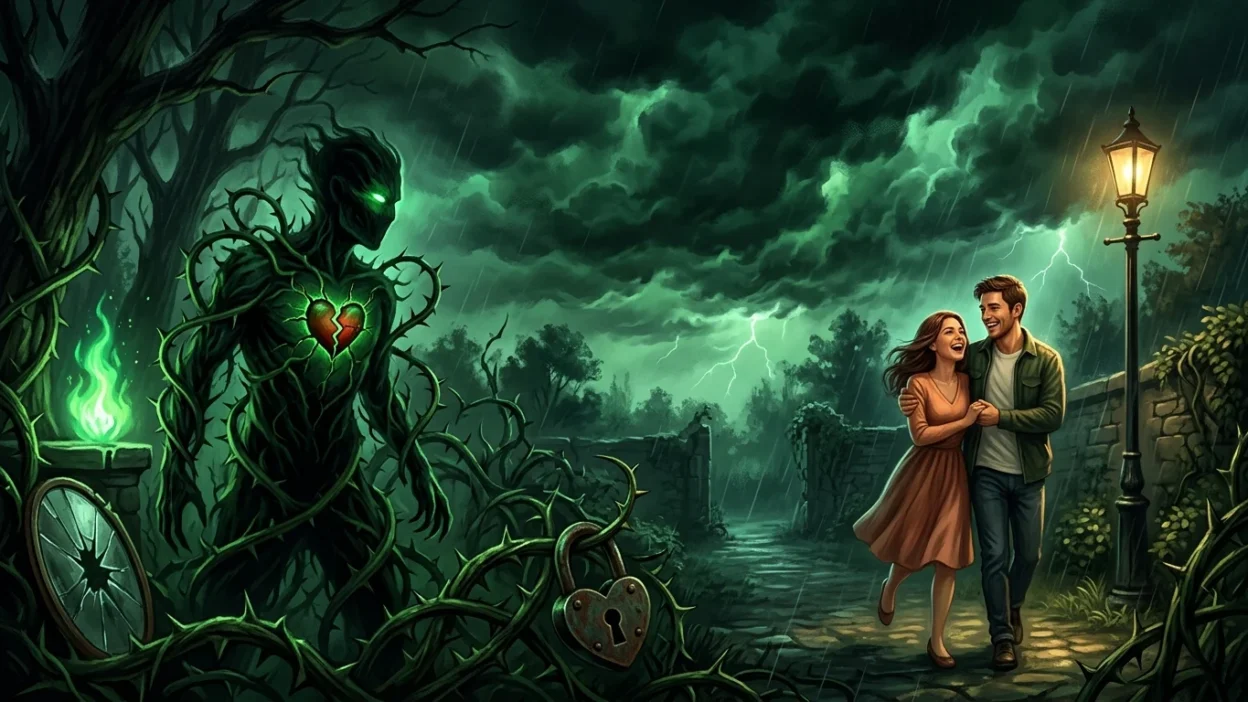
Jealousy is a strong emotion that can quietly grow inside a person and change the way they see the world. In stories, poems, essays and everyday descriptions, simply saying someone is jealous may not fully show the intensity of the feeling. This is where metaphors for jealousy can make writing more vivid and meaningful.
A metaphor describes one thing as another to create a deeper picture without using like or as. Jealousy can be described as a fire, shadow, poison, storm, or green monster. These images help readers understand how jealousy can grow, spread and affect thoughts and relationships. Below are 30 original metaphors for jealousy, followed by common mistakes, similar expressions, practice questions, FAQs and writing tips.
Quick Answer
Metaphors for jealousy describe jealousy as something else, such as a fire, storm, shadow, or poison. These comparisons help writers show envy, insecurity, possessiveness and emotional tension in a creative and memorable way.
30 Metaphors for Jealousy
| Metaphor | Meaning | Example |
|---|---|---|
| Jealousy is a green monster | Jealousy can feel powerful and difficult to control. | The green monster appeared when she saw her friend receive the award. |
| Jealousy is a hidden fire | It can burn quietly inside someone. | His jealousy was a hidden fire that grew every day. |
| Jealousy is a dark shadow | It can follow a person everywhere. | Jealousy became a dark shadow over their friendship. |
| Jealousy is a poison | It can damage relationships and trust. | Jealousy became poison in their happy relationship. |
| Jealousy is a storm | It can create emotional confusion and conflict. | Her jealousy was a storm that disturbed her peaceful mind. |
| Jealousy is a thief | It can steal happiness and peace. | Jealousy was a thief that stole his joy. |
| Jealousy is a cage | It can make people feel trapped by their own emotions. | Her jealousy became a cage around her thoughts. |
| Jealousy is a weed | It can grow quickly if it is not controlled. | Jealousy was a weed growing between the two friends. |
| Jealousy is a cloud | It can make positive things harder to see. | Jealousy became a cloud over his judgment. |
| Jealousy is a crack in glass | It can weaken something that once seemed strong. | Jealousy was a crack in their once-perfect friendship. |
| Metaphor | Meaning | Example |
|---|---|---|
| Jealousy is a hungry wolf | It can keep demanding more attention. | His jealousy was a hungry wolf that was never satisfied. |
| Jealousy is a tangled knot | It can make thoughts complicated. | Her jealousy was a tangled knot of fear and doubt. |
| Jealousy is a locked door | It can prevent trust and openness. | His jealousy became a locked door between them. |
| Jealousy is a restless flame | It can keep burning beneath calm emotions. | A restless flame of jealousy burned inside her. |
| Jealousy is a storm cloud | It can darken an otherwise happy moment. | A storm cloud of jealousy followed him into the celebration. |
| Jealousy is a mirror with cracks | It can distort how someone sees themselves and others. | His jealousy was a cracked mirror that changed his view of success. |
| Jealousy is a thorn | It can cause emotional pain. | Jealousy was a thorn in their growing friendship. |
| Jealousy is a chain | It can hold someone back emotionally. | Her jealousy became a chain that kept her from enjoying the moment. |
| Jealousy is a hungry flame | It can grow stronger when fed by comparison. | Comparison turned her jealousy into a hungry flame. |
| Jealousy is a fog | It can make judgment unclear. | Jealousy was a fog covering his better judgment. |
| Metaphor | Meaning | Example |
|---|---|---|
| Jealousy is an emotional earthquake | It can suddenly disturb someone’s inner peace. | The news caused an emotional earthquake of jealousy. |
| Jealousy is a leaking roof | It can slowly damage happiness. | Jealousy was a leaking roof over their relationship. |
| Jealousy is a green cloud | It can spread over otherwise positive feelings. | A green cloud of jealousy covered her excitement. |
| Jealousy is a silent burglar | It can quietly take away peace. | Jealousy was a silent burglar stealing his confidence. |
| Jealousy is a restless sea | It can create constantly changing emotions. | Her jealousy was a restless sea inside her heart. |
| Jealousy is a bitter seed | Small feelings can grow into larger problems. | One bitter seed of jealousy grew into distrust. |
| Jealousy is a crooked lens | It can distort how someone views situations. | Jealousy became a crooked lens through which he saw everyone. |
| Jealousy is a cage of comparison | Comparing yourself with others can feel limiting. | She built a cage of comparison from her jealousy. |
| Jealousy is a spark near dry grass | A small feeling can quickly become a larger conflict. | His jealousy was a spark near dry grass. |
| Jealousy is a shadow on happiness | It can reduce the joy of good moments. | Jealousy was a shadow on her happiness that afternoon. |
Common Mistakes
- Confusing a metaphor with a simile.
- Adding like or as to a metaphor.
- Using the same jealousy metaphor repeatedly.
- Making every metaphor extremely negative.
- Choosing an image that does not match the emotion.
- Mixing too many different metaphors in one paragraph.
- Using complicated comparisons that readers may not understand.
Similar Expressions
- Green-eyed monster
- Envious feelings
- Green with envy
- Burning with envy
- Feeling threatened
- Comparing yourself with others
- Resentful feelings
- Possessiveness
- Bitter envy
- Coveting what others have
Practice Questions
1. What is a metaphor?
Answer: A metaphor describes one thing as another to create a comparison without using like or as.
2. Complete the metaphor: Jealousy is a green ________.
Answer: Monster.
3. Which metaphor suggests that jealousy can damage relationships?
Answer: Jealousy is a poison.
4. Is “Jealousy is like a storm” a metaphor?
Answer: No. Because it uses like, it is a simile.
5. Write a sentence using “Jealousy is a shadow.”
Answer: Jealousy was a shadow that followed him throughout the day.
6. Why do writers use metaphors for jealousy?
Answer: They make difficult emotions easier to picture and understand.
7. Which metaphor suggests that jealousy can grow?
Answer: Jealousy is a weed.
8. Name one similar expression for jealousy.
Answer: Green eyed monster.
9. True or False: Metaphors can make emotional writing more vivid.
Answer: True.
10. Can writers create their own metaphors for jealousy?
Answer: Yes. Original metaphors can make writing more creative and memorable.
FAQs
What is a metaphor for jealousy?
A metaphor for jealousy describes jealousy as another thing, such as a fire, shadow, storm, poison, or monster, to express its effects more vividly.
What is the most common metaphor for jealousy?
The green-eyed monster is one of the best-known expressions connected with jealousy.
Why do writers use metaphors for jealousy?
Metaphors help readers visualize complicated emotions and understand how jealousy can affect thoughts, behavior, and relationships.
Is “jealousy is a fire” a metaphor?
Yes. It directly describes jealousy as a fire without using like or as.
What is the difference between a jealousy metaphor and a simile?
A metaphor makes a direct comparison, while a simile uses like or as. For example, “Jealousy is a fire” is a metaphor, while “Jealousy burns like fire” is a simile.
Can I use these metaphors in creative writing?
Yes. They can work well in stories, poems, essays, speeches, and other forms of creative writing.
Can I create my own metaphors for jealousy?
Absolutely. Think about what jealousy does—burns, grows, hides, spreads, or traps—and turn one of those ideas into a creative comparison.
Conclusion
Using metaphors for jealousy can make emotional writing much more powerful and interesting. Instead of simply telling readers that a character feels jealous, you can show the emotion as a fire, shadow, storm, poison, weed or cage. These images give readers something they can picture while adding depth to your writing. When choosing a metaphor, think about the kind of jealousy you want to describe and select an image that matches it. With practice, original metaphors can help your stories, poems, essays and descriptions become more expressive and memorable.

Logan Liam is the administrator of SmiliesHive, managing educational content about idioms, metaphors, and similes while ensuring clear, accurate, engaging, and beginner-friendly language resources for readers worldwide.