
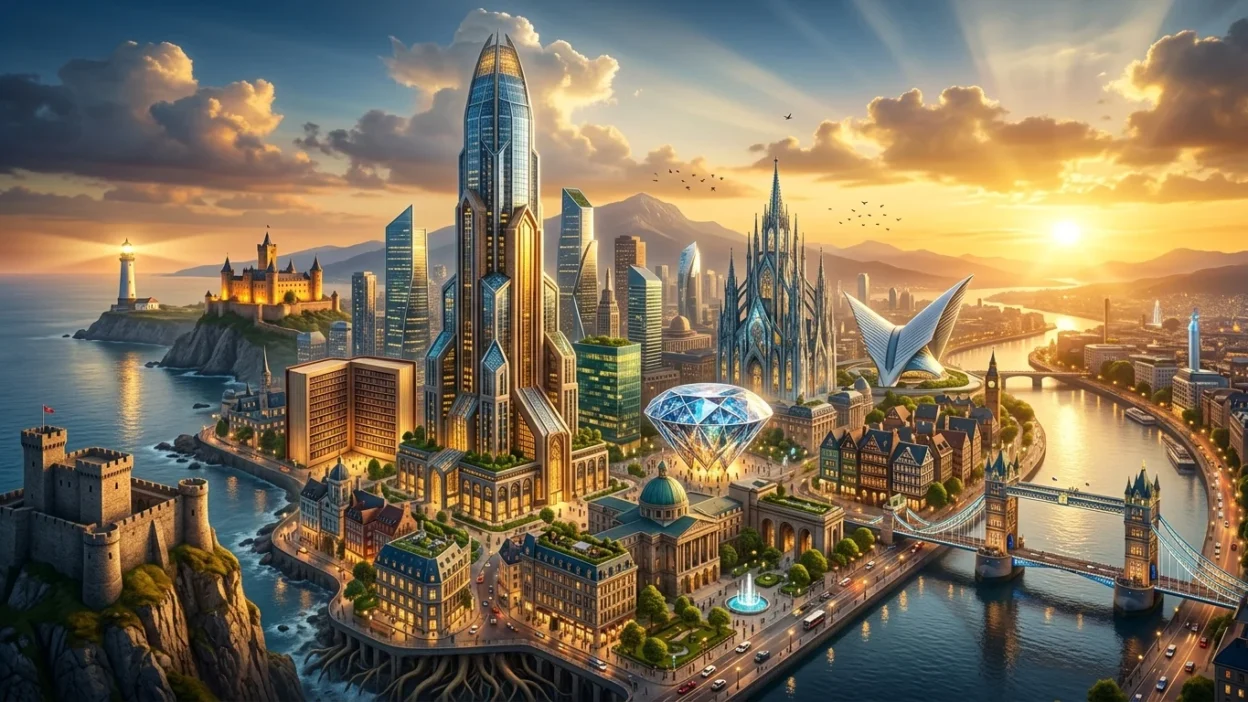
Buildings are more than walls, windows and roofs they can represent strength, history, identity, ambition, protection, beauty and human achievement. Metaphors for buildings help writers describe architecture in creative ways by comparing buildings to castles, trees, books, mountains, ships and other vivid images.
In this guide, you’ll discover 100+ metaphors for buildings, with meanings, example sentences, common mistakes, similar expressions, practice questions, FAQs and more. These metaphors can make descriptive writing, essays, poems, stories and speeches much more interesting.
Quick Answer
A metaphor for a building directly compares a building to another object, person, or idea without using “like” or “as.” For example, “The building is a fortress” suggests that it is strong and protective, while “The building is a lighthouse” suggests that it stands out and provides guidance.
What Are Metaphors for Buildings?
A metaphor is a figure of speech that makes a direct comparison between two different things. Metaphors for buildings allow writers to describe their appearance, purpose, strength, history, or emotional meaning in a creative way.
For example:
The skyscraper is a giant reaching for the sky.
This metaphor gives the building a human quality and emphasizes its great height and ambition.
100+ Metaphors for Buildings
| Metaphor | Meaning | Example |
|---|---|---|
| A fortress | Strength and protection | The building is a fortress against the storm. |
| A castle | Grandeur and power | The mansion is a castle in the hills. |
| A lighthouse | Guidance and visibility | The tower is a lighthouse of the city. |
| A giant | Great size | The skyscraper is a giant among the buildings. |
| A tree | Growth and height | The tower is a tree of steel and glass. |
| A mountain | Impressive height | The building is a mountain of concrete. |
| A book | History and stories | The old building is a book of history. |
| A time capsule | Preserved history | The building is a time capsule from another era. |
| A crown | Beauty and importance | The tower is the crown of the city. |
| A jewel | Architectural beauty | The museum is a jewel of the neighborhood. |
| A ship | Large structure in motion | The building is a ship anchored in the city. |
| A skeleton | Bare structural form | The unfinished building is a skeleton of steel. |
| A heart | Central importance | The community center is the heart of the town. |
| A home | Comfort and belonging | The building is a home for generations. |
| A shield | Protection and safety | The structure is a shield against harsh weather. |
| A bridge | Connection | The building is a bridge between generations. |
| A canvas | Artistic expression | The building is a canvas for architecture. |
| A sculpture | Artistic design | The museum is a sculpture of glass and stone. |
| A beacon | Hope and direction | The tower is a beacon in the darkness. |
| A monument | Historical importance | The building is a monument to the past. |
| A mirror | Reflects society | The building is a mirror of its community. |
| A stage | Place where life unfolds | The building is a stage for daily life. |
| A theater | Center of activity | The station is a theater of human movement. |
| A garden | Beauty and growth | The green building is a garden in the city. |
| A nest | Safety and shelter | The apartment is a nest for the family. |
| A shell | Protective covering | The house is a shell around its inhabitants. |
| A cocoon | Protection and transformation | The building is a cocoon of creativity. |
| A treehouse | Elevated retreat | The tower is a treehouse above the city. |
| A palace | Luxury and grandeur | The hotel is a palace of glass. |
| A temple | Sacred or important space | The library is a temple of knowledge. |
| A cathedral | Grandeur and awe | The skyscraper is a cathedral of steel. |
| A pyramid | Stability and permanence | The monument is a pyramid of stone. |
| A maze | Complex design | The old building is a maze of corridors. |
| A labyrinth | Confusing interior | The hospital is a labyrinth of rooms. |
| A puzzle | Complex construction | The structure is a puzzle of steel and glass. |
| A machine | Function and efficiency | The factory is a machine that never sleeps. |
| A clock | Passage of time | The old station is a clock holding memories. |
| A diary | Personal history | The house is a diary of its former residents. |
| A memory | Connection to the past | The old school is a memory carved in brick. |
| A storyteller | Holds human stories | The building is a storyteller made of stone. |
| A guardian | Protection | The old gatehouse is a guardian of the village. |
| A giant candle | Light and visibility | The tower is a giant candle over the harbor. |
| A torch | Inspiration | The university is a torch of knowledge. |
| A star | Prominence | The new museum is a star of modern architecture. |
| A pearl | Elegance | The white building is a pearl beside the sea. |
| A diamond | Precious beauty | The glass tower is a diamond in the skyline. |
| A jewel box | Contains valuable things | The gallery is a jewel box of art. |
| A wave | Curved architectural movement | The building is a wave frozen in concrete. |
| A sail | Lightness and movement | The roof is a sail catching the morning light. |
| A wing | Freedom and aspiration | The curved roof is a wing above the city. |
| A hand | Human creativity | The building is a hand reaching toward the sky. |
Common Mistakes
- Don’t use “like” or “as” in a direct metaphor.
- ❌ The building is like a fortress.
- ✅ The building is a fortress.
- Choose a metaphor that matches the building.
- Use fortress for strength and jewel for beauty.
- Don’t force an unrelated comparison.
- The metaphor should help readers understand something meaningful about the building.
- Avoid mixing too many metaphors.
- Choose one strong image instead of combining several unrelated images.
Similar Expressions
- A towering giant
- A concrete jungle
- A monument to history
- A symbol of progress
- An architectural masterpiece
- A home of memories
- A landmark of the city
- A pillar of the community
- A beacon of hope
- A monument to human achievement
- A fortress of strength
- A temple of knowledge
- A jewel in the skyline
- A window into the past
- A symbol of ambition
Practice Questions
Fill in the blanks.
- The building is a ________ protecting the city.
- The skyscraper is a ________ reaching toward the sky.
- The old house is a ________ of history.
- The tower is a ________ guiding travelers.
- The museum is a ________ of the city.
- The library is a ________ of knowledge.
- The building is a ________ holding memories.
- The glass tower is a ________ in the skyline.
- The community center is the ________ of the neighborhood.
- The building is a ________ connecting generations.
Answers
- fortress
- giant
- book
- lighthouse
- jewel
- temple
- diary
- diamond
- heart
- bridge
FAQs
What is a metaphor for a building?
A metaphor for a building directly compares it to another object or idea without using like or as. Examples include a fortress, a giant, a jewel, a lighthouse, and a book of history.
What are common metaphors for buildings?
Common metaphors include a castle, a fortress, a mountain, a tree, a crown, a jewel, a ship, and a monument.
What is a good metaphor for a tall building?
A giant, a mountain, or a tree reaching for the sky are strong metaphors for a tall building because they emphasize height and presence.
What is a metaphor for an old building?
An old building can be described as a book of history, a time capsule, a diary, or a memory carved in stone.
Can buildings be metaphors in literature?
Yes. Writers often use buildings to symbolize strength, family, society, history, identity, ambition, protection, or change.
Conclusion
Metaphors for buildings turn ordinary structures into vivid images of strength, beauty, history and human creativity. Whether you describe a skyscraper as a giant, an old house as a book of history or a beautiful museum as a jewel, these comparisons can make your writing more powerful and memorable.
Use these metaphors in poetry, essays, stories, speeches, creative writing and descriptive passages to give buildings deeper meaning beyond their walls and windows.