
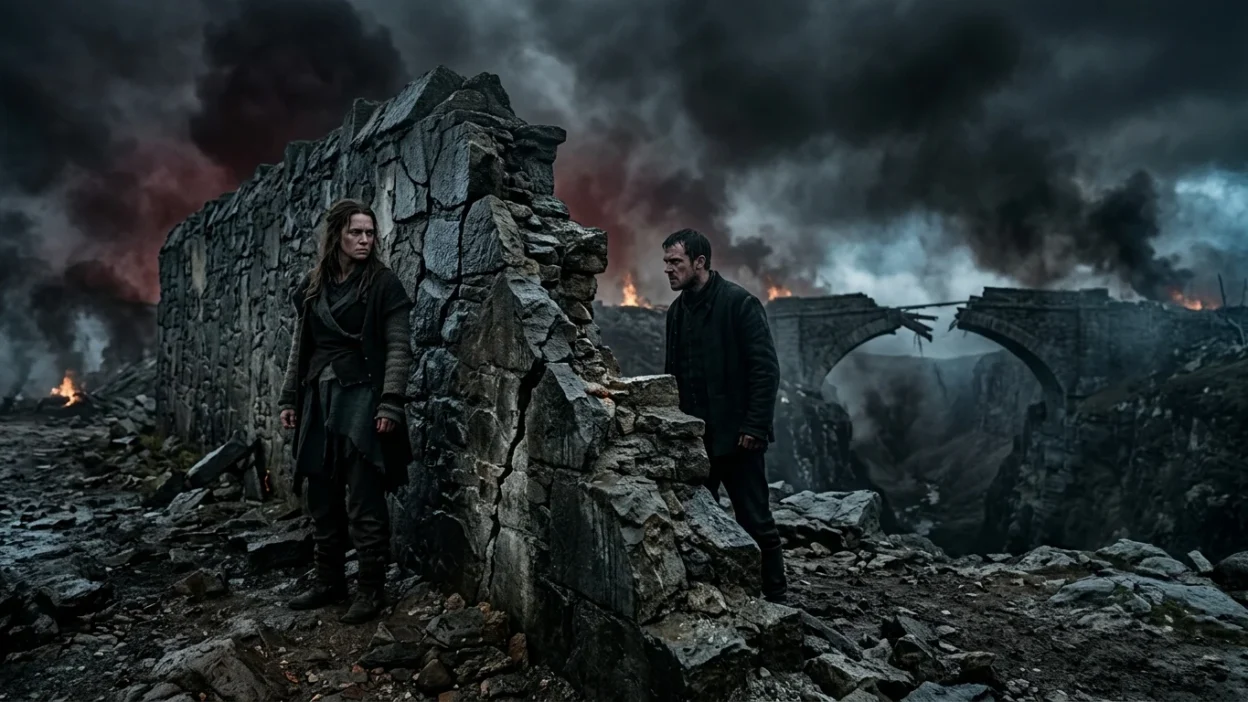
Hate is a strong and difficult emotion. Simply saying that someone “hated” another person may not show how deep, painful or destructive that feeling can become. Metaphors for hate help writers turn this powerful emotion into images such as fire, ice, storms, poison, walls, chains and darkness.
Whether you are writing a story, poem, essay, speech, or creative description, the right metaphor can help readers understand the intensity of hatred. These examples give you many ways to describe anger, resentment, hostility, bitterness, distance and emotional conflict through vivid figurative language.
Quick Answer
Metaphors for hate describe hatred by comparing it to something powerful or destructive. Examples include “Hate is a wildfire,” “Hate is poison,” “Hate is a wall,” “Hate is a dark cloud” and “Hate is a frozen heart.” These metaphors make emotional writing more vivid, memorable and expressive.
What Are Metaphors for Hate?
A metaphor is a type of figurative language that describes one thing as another thing to create a stronger image.
For example:
Hate is a wildfire.
Hate is not literally fire. The metaphor compares hate to a wildfire because both can spread quickly, become difficult to control, and cause damage.
Another example is:
Hate is a wall.
This suggests that hatred can separate people and prevent communication or connection.
Metaphors for hate are useful in creative writing, poetry, essays, stories, speeches and emotional descriptions.
105 Powerful Metaphors for Hate
| # | Metaphor | Meaning | Example Sentence |
|---|---|---|---|
| 1 | Hate is a wildfire | A powerful emotion that can spread and destroy | His hatred was a wildfire that damaged every relationship around him. |
| 2 | Hate is poison | A harmful feeling that hurts from within | Her hate was poison slowly filling her heart. |
| 3 | Hate is a dark cloud | A negative feeling that hangs over life | His hatred was a dark cloud over every conversation. |
| 4 | Hate is a storm | A violent and emotional force | Their argument became a storm of hatred. |
| 5 | Hate is a hurricane | An overwhelming destructive emotion | Her anger turned into a hurricane of hate. |
| 6 | Hate is fire | A burning and intense emotion | Hate was a fire burning inside him. |
| 7 | Hate is a flame | A feeling that continues to burn | The old hatred remained a flame in his heart. |
| 8 | Hate is an ember | A hidden feeling that can return | The ember of hatred never completely disappeared. |
| 9 | Hate is smoke | A feeling that clouds judgment | His hatred was smoke filling his thoughts. |
| 10 | Hate is an inferno | Extremely intense hatred | Their conflict became an inferno of hate. |
| 11 | Hate is ice | A cold emotional response | Her hate was ice between them. |
| 12 | Hate is a frozen heart | Emotional coldness and distance | His hatred had turned his heart into ice. |
| 13 | Hate is a winter | A cold period without warmth | Their relationship entered a long winter of hatred. |
| 14 | Hate is a frozen river | Emotion that has stopped flowing | Hate became a frozen river between the two families. |
| 15 | Hate is a cold wind | A feeling that pushes people apart | His words were a cold wind of hatred. |
| 16 | Hate is darkness | The absence of warmth or kindness | Hatred brought darkness into her life. |
| 17 | Hate is a shadow | A negative feeling that follows someone | His hatred followed him like a shadow. |
| 18 | Hate is a black hole | A force that consumes everything | His hatred became a black hole swallowing his happiness. |
| 19 | Hate is a dark forest | A confusing and frightening emotional place | She felt lost in a dark forest of hate. |
| 20 | Hate is a deep night | Emotional darkness and loneliness | Their friendship disappeared into a deep night of hatred. |
| 21 | Hate is a wall | Something that separates people | Hate built a wall between the brothers. |
| 22 | Hate is a fence | A barrier between people | Their resentment became a fence between them. |
| 23 | Hate is a locked door | A refusal to connect | Her hatred was a locked door to forgiveness. |
| 24 | Hate is a closed gate | Emotional rejection | His anger became a closed gate between them. |
| 25 | Hate is a prison | A feeling that traps a person | His hatred became a prison he could not escape. |
| 26 | Hate is a cage | Emotional confinement | She lived in a cage of resentment. |
| 27 | Hate is a chain | Something that keeps people tied to pain | Hatred was a chain holding him to the past. |
| 28 | Hate is an anchor | A feeling that weighs someone down | His hatred was an anchor preventing him from moving forward. |
| 29 | Hate is a heavy stone | A painful emotional burden | She carried hate like a heavy stone in her chest. |
| 30 | Hate is a weight | Something emotionally difficult to carry | His hatred became a weight on his heart. |
| 31 | Hate is a thorn | A painful feeling that remains | The old hatred was a thorn that never left. |
| 32 | Hate is a knife | An emotion that can hurt deeply | His words were knives sharpened by hate. |
| 33 | Hate is a sword | A force used to attack others | Hate became a sword between the two rivals. |
| 34 | Hate is a weapon | A destructive force | He used his hatred like a weapon. |
| 35 | Hate is a bomb | An emotion that can suddenly explode | Their hidden hatred was a bomb waiting to explode. |
| 36 | Hate is a ticking bomb | Growing tension ready to erupt | Their resentment was a ticking bomb. |
| 37 | Hate is a grenade | A small source of potentially large conflict | One angry comment became a grenade of hatred. |
| 38 | Hate is a spark | A small beginning that can grow | One insult was the spark that started their hatred. |
| 39 | Hate is a match | Something that can ignite conflict | His cruel remark was a match thrown into their argument. |
| 40 | Hate is gasoline | Something that makes conflict stronger | Every insult poured gasoline on their hatred. |
| 41 | Hate is a furnace | A place where anger grows hotter | His mind became a furnace of hatred. |
| 42 | Hate is a boiling pot | Anger building toward an eruption | Her resentment was a boiling pot ready to overflow. |
| 43 | Hate is lava | Slow but destructive emotional heat | His hatred was lava moving beneath the surface. |
| 44 | Hate is acid | A feeling that slowly destroys | Bitterness was acid eating away at their friendship. |
| 45 | Hate is rust | A feeling that slowly damages relationships | Years of resentment became rust on their friendship. |
| 46 | Hate is a disease | An unhealthy emotional condition | Hatred spread through the family like a disease. |
| 47 | Hate is a virus | A feeling that can spread from person to person | Their anger became a virus infecting the whole group. |
| 48 | Hate is a parasite | A feeling that feeds on a person | His hatred was a parasite feeding on his peace. |
| 49 | Hate is a leech | Something that drains emotional energy | Resentment was a leech draining her happiness. |
| 50 | Hate is a monster | A powerful emotion that becomes difficult to control | His hatred became a monster of its own. |
| 51 | Hate is a beast | A wild and uncontrollable emotion | Anger awakened a beast of hatred inside him. |
| 52 | Hate is a wolf | A threatening and dangerous feeling | His hatred waited like a wolf in the darkness. |
| 53 | Hate is a snake | A dangerous emotion that can strike | Her resentment was a snake hiding beneath calm words. |
| 54 | Hate is a spiderweb | Something that traps people | Their hatred became a spiderweb of blame. |
| 55 | Hate is quicksand | A feeling that pulls someone deeper | The more he hated, the deeper he sank into quicksand. |
| 56 | Hate is a maze | A confusing emotional trap | She became lost in a maze of resentment. |
| 57 | Hate is a trap | Something difficult to escape | His anger became a trap that held him in the past. |
| 58 | Hate is a dead end | A feeling that leads nowhere useful | Their hatred was a dead end for both sides. |
| 59 | Hate is a broken bridge | A damaged connection | Their resentment became a broken bridge between their hearts. |
| 60 | Hate is a shattered mirror | A damaged view of another person | Hatred turned their friendship into a shattered mirror. |
| 61 | Hate is a cracked window | A damaged way of seeing things | His hatred was a cracked window through which he saw the world. |
| 62 | Hate is a stain | Something difficult to remove | The old hatred was a stain on their history. |
| 63 | Hate is ink | Something that leaves a lasting mark | Her resentment was ink written across her memories. |
| 64 | Hate is a scar | A painful reminder of the past | Their hatred was a scar from an old conflict. |
| 65 | Hate is a wound | Emotional pain caused by conflict | The hatred was a wound that refused to heal. |
| 66 | Hate is a bruise | Pain that remains after an injury | His resentment was an emotional bruise. |
| 67 | Hate is a broken record | A feeling that repeats the same anger | Her hatred was a broken record replaying old mistakes. |
| 68 | Hate is an echo | An old feeling that keeps returning | The hatred was an echo of their painful past. |
| 69 | Hate is a whisper | A hidden negative feeling | A quiet whisper of hate remained between them. |
| 70 | Hate is a scream | A powerful expression of pain or anger | His hatred was a silent scream inside him. |
| 71 | Hate is thunder | A loud and powerful emotion | His anger was thunder shaking the room. |
| 72 | Hate is lightning | A sudden burst of anger | Her hatred struck like lightning. |
| 73 | Hate is a tidal wave | A powerful emotional force | A tidal wave of hate swept through the group. |
| 74 | Hate is a dark ocean | Deep and difficult emotion | He was drowning in a dark ocean of hatred. |
| 75 | Hate is a sinking ship | A relationship being destroyed | Their hatred turned the friendship into a sinking ship. |
| 76 | Hate is a burning bridge | A relationship damaged beyond easy repair | Their argument burned the bridge between them. |
| 77 | Hate is a battlefield | A place filled with conflict | Their home became a battlefield of resentment. |
| 78 | Hate is a war | A prolonged conflict | Their rivalry became a war of bitterness. |
| 79 | Hate is a battleground | A place where emotions collide | His mind became a battleground of anger and hate. |
| 80 | Hate is a broken compass | A feeling that leads people in the wrong direction | His hatred was a broken compass guiding him toward revenge. |
| 81 | Hate is a crooked road | A destructive emotional path | Resentment led him down a crooked road. |
| 82 | Hate is a dark road | A painful direction in life | Their hatred took them down a dark road. |
| 83 | Hate is a locked heart | Refusal to feel warmth | Her hatred left her with a locked heart. |
| 84 | Hate is a cold heart | Lack of compassion | His resentment had created a cold heart. |
| 85 | Hate is a bitter taste | An unpleasant emotional experience | Their conflict left a bitter taste in everyone’s heart. |
| 86 | Hate is bitter medicine | A painful emotional experience | The hatred became bitter medicine for both sides. |
| 87 | Hate is a bitter fruit | Something unpleasant produced by conflict | Their anger grew into a bitter fruit. |
| 88 | Hate is a poisonous seed | A small feeling that grows destructively | One small resentment became a poisonous seed. |
| 89 | Hate is a weed | A feeling that keeps growing if ignored | Their resentment was a weed spreading through the friendship. |
| 90 | Hate is a vine | A feeling that wraps around people | Hatred became a vine strangling their relationship. |
| 91 | Hate is a root | A deep cause of conflict | Old hatred was the root of their disagreement. |
| 92 | Hate is a rotten root | A deeply harmful source | Resentment was the rotten root beneath their conflict. |
| 93 | Hate is a dark seed | A negative feeling that grows | One cruel thought planted a dark seed of hate. |
| 94 | Hate is a thorny garden | A painful emotional environment | Their relationship became a thorny garden of resentment. |
| 95 | Hate is a heavy backpack | A burden carried everywhere | He carried his hatred like a heavy backpack. |
| 96 | Hate is a suitcase of anger | A collection of painful memories | She carried a suitcase of anger from the past. |
| 97 | Hate is a shadowy passenger | A feeling that travels with you | His hatred became a shadowy passenger on every journey. |
| 98 | Hate is a dark passenger | A hidden emotional burden | Resentment was a dark passenger in his mind. |
| 99 | Hate is a prison guard | A force that prevents emotional freedom | His hatred became a prison guard keeping him trapped. |
| 100 | Hate is a hungry monster | A feeling that always wants more | Hatred was a hungry monster demanding revenge. |
| 101 | Hate is a bottomless pit | A feeling that never seems satisfied | His resentment was a bottomless pit of anger. |
| 102 | Hate is an endless storm | A conflict that does not seem to stop | Their relationship became an endless storm of bitterness. |
| 103 | Hate is a fire that feeds itself | A feeling strengthened by more anger | Their hatred was a fire that fed itself with every argument. |
| 104 | Hate is a wall around the heart | Emotional protection that prevents connection | Her hatred became a wall around her heart. |
| 105 | Hate is a chain to the past | A feeling that prevents moving forward | His hatred was a chain tying him to yesterday. |
Metaphors for Hate in Creative Writing
Metaphors can make hatred feel real and visible in stories and poems.
Instead of writing:
“He hated his enemy.”
You could write:
“Hate was a wildfire burning through his thoughts.”
Or:
“A wall of ice stood between them.”
These descriptions give readers a stronger emotional picture.
Other creative examples include:
- Hate was a dark cloud following him everywhere.
- Her resentment was a thorn in her heart.
- Their anger was a storm trapped inside four walls.
- Hatred was a chain connecting them to the past.
- His words were knives sharpened by bitterness.
- Their friendship had become a bridge covered in flames.
Metaphors for Deep Hate
Deep hatred can be described with powerful images:
- Hate is a black hole.
- Hate is a bottomless pit.
- Hate is an ocean without a shore.
- Hate is a frozen river.
- Hate is a deep wound.
- Hate is a dark forest.
- Hate is a locked prison.
- Hate is a heavy chain.
- Hate is a poisonous root.
- Hate is an endless storm.
These metaphors suggest hatred that has lasted for a long time or become deeply rooted.
Metaphors for Hate and Anger
Hate and anger often overlap, but they can be shown through different images.
Try:
- Hate is boiling lava.
- Hate is thunder.
- Hate is lightning.
- Hate is a burning furnace.
- Hate is an exploding bomb.
- Hate is a raging storm.
- Hate is a wildfire.
- Hate is a ticking clock.
- Hate is a loaded weapon.
- Hate is a volcano waiting to erupt.
For example:
“His anger was a volcano, and every insult added pressure beneath the surface.”
Metaphors for Hate and Resentment
Resentment often grows slowly, so metaphors involving plants, rust, and hidden fire work well:
- Resentment is a poisonous seed.
- Resentment is a growing weed.
- Resentment is rust.
- Resentment is a hidden ember.
- Resentment is a thorn.
- Resentment is a slow poison.
- Resentment is a vine.
- Resentment is a dark root.
- Resentment is a crack in a wall.
- Resentment is a stain on memory.
These images show that resentment can begin small and become stronger over time.
Metaphors for Hate Between People
When describing hatred between people, use images that show separation and conflict:
- Hate is a wall between hearts.
- Hate is a locked door.
- Hate is a broken bridge.
- Hate is a burning bridge.
- Hate is a frozen river.
- Hate is a battlefield.
- Hate is a fence.
- Hate is a closed gate.
- Hate is a broken compass.
- Hate is a dark road.
For example:
“A wall of resentment stood between the two brothers.”
Metaphors for Hate in Poetry
Poetry often uses emotional images rather than direct statements.
You could describe hate as:
- A black rose blooming in the heart.
- A winter with no spring.
- A candle burning at both ends.
- A river flowing with darkness.
- A shadow that refuses to leave.
- A storm trapped behind the eyes.
- A knife hidden beneath a smile.
- A frozen tear.
- A song made of silence.
- A dark star in an empty sky.
These images can help poems feel deeper and more emotional.
How to Create Your Own Metaphors for Hate
Creating your own metaphors is easier when you think about what hatred feels like.
1. Identify the Feeling
Ask yourself:
- Is the hate hot or cold?
- Is it sudden or slow?
- Is it hidden or obvious?
- Is it painful or destructive?
- Does it separate people?
- Does it grow over time?
2. Choose a Matching Image
For example:
Hot → fire
Cold → ice
Destructive → wildfire
Hidden → shadow
Separating → wall
Growing → weed
Painful → wound
3. Create the Metaphor
Turn the image into a direct comparison:
Hate is a wildfire.
Or:
Hate is a wall around the heart.
4. Add Context
A more detailed metaphor can be even stronger:
“His hatred was a wildfire, spreading from one bitter memory to the next.”
Common Mistakes When Using Metaphors for Hate
1. Making every metaphor violent
Hate can be described through fire and weapons, but it can also be shown through ice, distance, silence, shadows, walls, and darkness.
2. Using confusing comparisons
Make sure the image matches the emotion. A metaphor should help readers understand the feeling.
3. Mixing too many metaphors
Avoid jumping from fire to ocean to mountain to spaceship in one sentence. Choose a central image.
4. Making hate seem too simple
Hate can include anger, pain, fear, disappointment, resentment, and distance. Choose a metaphor that matches the exact emotion.
5. Repeating the same image
Using “hate is fire” repeatedly can become boring. Try different images to create variety.
Similar Expressions for Hate
Here are some useful words and expressions related to hate:
- Dislike
- Hatred
- Anger
- Resentment
- Bitterness
- Hostility
- Rage
- Loathing
- Contempt
- Antipathy
- Animosity
- Abhorrence
- Detestation
- Strong dislike
- Deep resentment
- Bitter feelings
- Bad blood
- Hard feelings
- Ill will
- Deep hostility
10 Practice Questions About Metaphors for Hate
1. What does “Hate is a wildfire” mean?
Answer: It means hatred can spread quickly and cause serious emotional damage.
2. What does “Hate is ice” suggest?
Answer: It suggests emotional coldness, distance, or a lack of warmth.
3. Which metaphor best describes hidden hatred?
A. Hate is sunshine.
B. Hate is a shadow.
C. Hate is a flower.
Answer: B. Hate is a shadow.
4. Complete the metaphor: “Hate is ______.”
Answer: Answers may vary. For example, “Hate is poison.”
5. Which metaphor represents hatred that grows slowly?
A. Hate is a weed.
B. Hate is lightning.
C. Hate is a flash.
Answer: A. Hate is a weed.
6. What does “Hate is a wall” mean?
Answer: It means hatred can create emotional separation between people.
7. Is “Hate is poison” literal?
Answer: No. It is a metaphor suggesting that hatred can be harmful and damaging.
8. Write a metaphor for deep resentment.
Answer: “Resentment is a poisonous root.”
9. What does “Hate is a broken bridge” suggest?
Answer: It suggests that hatred can damage or destroy relationships and connections.
10. Create a metaphor for hatred that refuses to disappear.
Answer: “Hate is an ember that never dies.”
FAQs About Metaphors for Hate
What is a good metaphor for hate?
“Hate is a wildfire” is a powerful metaphor because it suggests that hatred can spread and cause destruction if it is not controlled.
What is a metaphor for deep hatred?
You can say “Hate is a bottomless pit” or “Hate is a black hole.” Both suggest a deep and consuming emotion.
What is a metaphor for hidden hate?
“Hate is a shadow” works well because a shadow can remain nearby without always being obvious.
What is a metaphor for hatred between two people?
“Hate is a wall between hearts” is a clear metaphor for emotional distance and separation.
What is a metaphor for resentment?
“Resentment is a poisonous seed” suggests that a small negative feeling can grow into something much larger.
What is a metaphor for hate in poetry?
Poetry can describe hate as a dark rose, frozen river, endless winter, hidden knife, black cloud, or storm behind the eyes.
Why use metaphors for hate?
Metaphors help writers show the strength and emotional effects of hatred without simply naming the emotion. They make descriptions more vivid and memorable.
Can I use these metaphors in an essay?
Yes. Metaphors for hate can work well in essays, stories, poems, speeches, and character descriptions when they fit naturally with the topic.
Conclusion
Metaphors for hate give writers many creative ways to describe one of the strongest human emotions. Hate can be a wildfire, a dark cloud, a wall, a frozen river, a poison, a thorn, a chain or a storm.
The best metaphor depends on the kind of hatred you want to describe. Use fire for intensity, ice for emotional coldness, walls for separation, weeds for growing resentment and chains for feelings that keep someone trapped in the past.
With thoughtful figurative language, your writing can show not only what hatred feels like but also how it affects people, relationships and choices.