
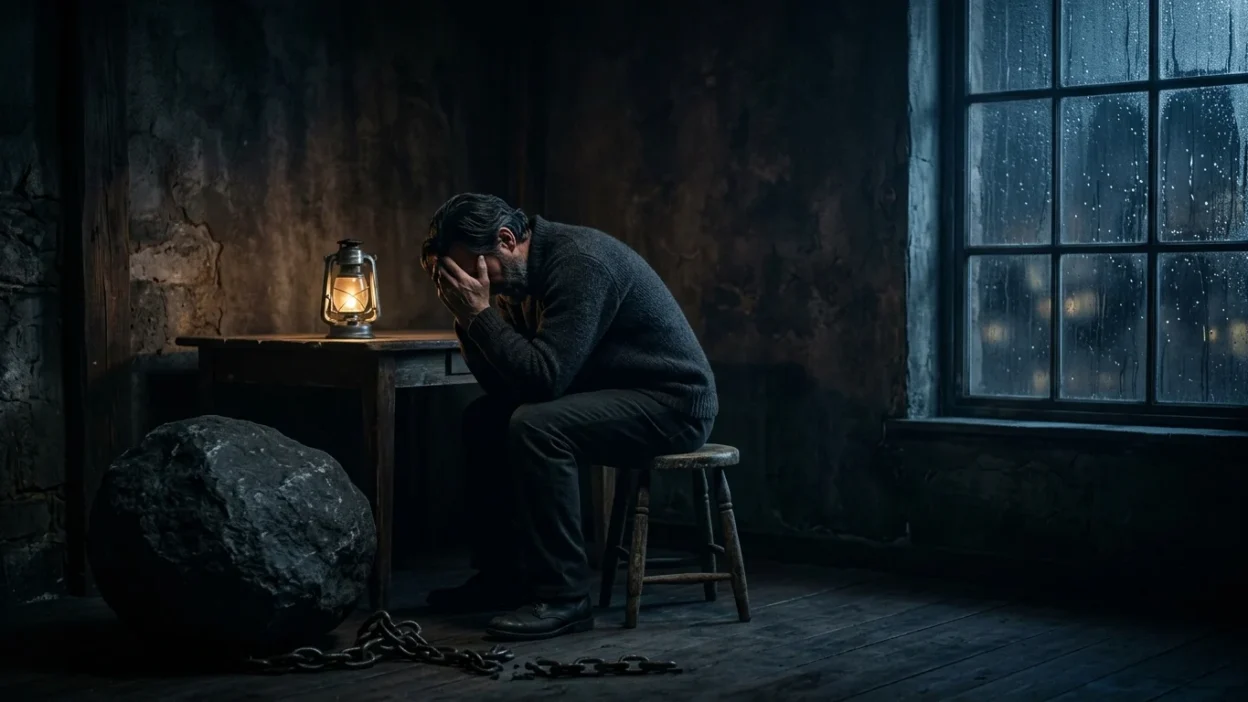
Guilt is a heavy feeling that can stay in the mind long after something has happened. It can make a person feel trapped, ashamed, worried or unable to move forward. Because guilt is an invisible emotion, metaphors are a powerful way to make it easier for readers to understand.
In creative writing, metaphors for guilt turn an inner feeling into something readers can see and imagine. Guilt can become a heavy stone, a dark cloud, a chain, a shadow or even a locked room. These comparisons can make stories, poems, essays and personal writing much more emotional and memorable.
Quick Answer
Metaphors for guilt describe guilt as something physical or visible, such as a heavy burden, dark cloud, chain, shadow, wound or prison. They help writers show feelings of regret, shame, responsibility and emotional pain without simply saying, “I felt guilty.”
What Are Metaphors for Guilt?
Metaphors for guilt are examples of figurative language that describe guilt by comparing it directly to another thing.
For example:
“Guilt is a heavy stone in my chest.”
This does not mean there is literally a stone inside the person. It shows that guilt feels heavy, painful, and difficult to carry.
Metaphors for guilt are useful in:
- Creative writing
- Poetry
- Stories
- Essays
- Personal writing
- Speeches
- Journaling
- Emotional descriptions
- Character development
105 Metaphors for Guilt
| # | Metaphor | Meaning | Example Sentence |
|---|---|---|---|
| 1 | Guilt is a heavy stone. | A painful burden | Guilt was a heavy stone in his heart. |
| 2 | Guilt is a dark cloud. | A constant negative feeling | Guilt followed her like a dark cloud. |
| 3 | Guilt is a shadow. | A feeling that follows you | His guilt was a shadow he could not escape. |
| 4 | Guilt is a chain. | Feeling emotionally trapped | Guilt was a chain around her heart. |
| 5 | Guilt is a prison. | Feeling unable to move forward | His guilt became a prison of his own making. |
| 6 | Guilt is a weight. | Emotional heaviness | She carried guilt as if it were a great weight. |
| 7 | Guilt is a wound. | Emotional pain caused by regret | Guilt was a wound that refused to heal. |
| 8 | Guilt is a thorn. | A small but painful feeling | The memory was a thorn in his mind. |
| 9 | Guilt is a storm. | Emotional confusion and pain | A storm of guilt raged inside her. |
| 10 | Guilt is a cage. | Feeling trapped by regret | His guilt was a cage with invisible bars. |
| 11 | Guilt is an anchor. | Something holding you back | Guilt became an anchor dragging her backward. |
| 12 | Guilt is quicksand. | A feeling that gets worse when you struggle | His guilt was quicksand beneath his feet. |
| 13 | Guilt is a dark room. | Being trapped in painful thoughts | She lived in the dark room of guilt. |
| 14 | Guilt is a locked door. | Being unable to move past the past | Guilt was a locked door between him and peace. |
| 15 | Guilt is a broken mirror. | A damaged view of yourself | Guilt was a broken mirror showing only his mistakes. |
| 16 | Guilt is a scar. | A lasting reminder of wrongdoing | The guilt remained like a scar on her heart. |
| 17 | Guilt is a bruise. | Pain that remains after an event | His guilt was a bruise no one could see. |
| 18 | Guilt is a black hole. | A feeling that consumes happiness | Guilt became a black hole that swallowed her joy. |
| 19 | Guilt is a prison guard. | Something preventing emotional freedom | His guilt stood like a prison guard at the door. |
| 20 | Guilt is a heavy backpack. | Something difficult to carry | She carried guilt like a heavy backpack. |
| 21 | Guilt is a mountain. | A huge emotional obstacle | His guilt was a mountain standing between him and peace. |
| 22 | Guilt is a wall. | Something blocking peace | Guilt built a wall around her heart. |
| 23 | Guilt is a chain of memories. | Painful memories that hold you back | Guilt was a chain of memories pulling him backward. |
| 24 | Guilt is a whisper. | A quiet inner reminder | Guilt was a whisper in the back of her mind. |
| 25 | Guilt is a voice. | An inner reminder of wrongdoing | His guilt was a voice that never stopped speaking. |
| 26 | Guilt is an echo. | A past mistake repeating in your mind | The mistake became an echo of guilt. |
| 27 | Guilt is a bell. | A warning that keeps sounding | Her guilt was a bell ringing inside her mind. |
| 28 | Guilt is a ticking clock. | A constant reminder of the past | Guilt was a ticking clock she could not silence. |
| 29 | Guilt is a shadowy hand. | Something emotionally controlling you | Guilt felt like a shadowy hand around his heart. |
| 30 | Guilt is a knife. | Sharp emotional pain | The guilt was a knife cutting through his thoughts. |
| 31 | Guilt is a storm cloud. | Persistent emotional darkness | A storm cloud of guilt hung over him. |
| 32 | Guilt is rain. | Sadness that keeps falling | Guilt fell over her like endless rain. |
| 33 | Guilt is fog. | Confusion caused by regret | Guilt filled his mind with fog. |
| 34 | Guilt is smoke. | A feeling that fills your thoughts | Guilt was smoke clouding her judgment. |
| 35 | Guilt is fire. | An intense painful emotion | Guilt was a fire burning inside him. |
| 36 | Guilt is a flame. | A feeling that continues burning | A small flame of guilt remained in her heart. |
| 37 | Guilt is an ember. | A quiet feeling that remains | The ember of guilt never completely died. |
| 38 | Guilt is a wildfire. | Guilt spreading uncontrollably | His guilt became a wildfire in his mind. |
| 39 | Guilt is poison. | A harmful emotional feeling | Guilt was poison slowly hurting her peace. |
| 40 | Guilt is a disease. | An unhealthy emotional burden | His guilt spread through his thoughts like a disease. |
| 41 | Guilt is a parasite. | Something that drains happiness | Guilt was a parasite feeding on her joy. |
| 42 | Guilt is a thief. | Something that steals happiness | Guilt was a thief that stole his sleep. |
| 43 | Guilt is a burglar. | Something invading your peace | Guilt was a burglar breaking into her peaceful thoughts. |
| 44 | Guilt is a monster. | A frightening emotional force | The monster of guilt followed him everywhere. |
| 45 | Guilt is a beast. | A powerful inner struggle | He fought the beast of guilt every night. |
| 46 | Guilt is a wolf. | A feeling that hunts you | Guilt was a wolf always chasing her. |
| 47 | Guilt is a snake. | A dangerous hidden feeling | Guilt was a snake curled inside his thoughts. |
| 48 | Guilt is a spiderweb. | A trap made of thoughts | Guilt spun a spiderweb around her mind. |
| 49 | Guilt is a maze. | Difficulty finding emotional peace | His guilt was a maze with no clear exit. |
| 50 | Guilt is a trap. | Something difficult to escape | Regret turned into a trap of guilt. |
| 51 | Guilt is a locked cage. | Emotional imprisonment | She felt trapped inside a locked cage of guilt. |
| 52 | Guilt is a dark forest. | Feeling lost in regret | His mind became a dark forest of guilt. |
| 53 | Guilt is a lonely road. | A painful emotional journey | Guilt sent her down a lonely road. |
| 54 | Guilt is a broken compass. | Losing emotional direction | Guilt was a broken compass leading him nowhere. |
| 55 | Guilt is a dead end. | Being unable to move forward | His guilt felt like a dead end. |
| 56 | Guilt is a heavy coat. | Something uncomfortable that stays with you | She wore guilt like a heavy coat. |
| 57 | Guilt is wet clothing. | A feeling that makes you uncomfortable | Guilt clung to him like wet clothing. |
| 58 | Guilt is a burden on the shoulders. | Something difficult to carry | His guilt was a burden on his shoulders. |
| 59 | Guilt is a stone in the shoe. | A constant irritation | The mistake was a stone in the shoe of his mind. |
| 60 | Guilt is a knot. | Emotional tension | Guilt tied a knot inside her stomach. |
| 61 | Guilt is a knot in the heart. | Deep emotional pain | Guilt was a knot in his heart. |
| 62 | Guilt is a weight on the chest. | Feeling emotionally crushed | Guilt felt like a weight on her chest. |
| 63 | Guilt is a cage of regret. | Being trapped by past actions | He lived inside a cage of regret. |
| 64 | Guilt is a chain around the soul. | Deep emotional imprisonment | Guilt was a chain around his soul. |
| 65 | Guilt is a prison without walls. | Invisible emotional imprisonment | Her guilt was a prison without walls. |
| 66 | Guilt is an invisible hand. | An unseen force controlling you | Guilt was an invisible hand guiding his thoughts. |
| 67 | Guilt is a dark stain. | Something that damages your self-image | The mistake left a dark stain on his conscience. |
| 68 | Guilt is an ink stain. | A mistake that seems impossible to erase | Guilt was an ink stain across her memories. |
| 69 | Guilt is a stain on the heart. | Lasting emotional shame | The guilt left a stain on his heart. |
| 70 | Guilt is a mark on the soul. | A deep emotional reminder | The mistake became a mark on her soul. |
| 71 | Guilt is a broken record. | The same regret repeating | Guilt was a broken record replaying the past. |
| 72 | Guilt is a song that never ends. | Constant emotional remembrance | Her guilt was a song that never ended. |
| 73 | Guilt is a book of mistakes. | A mind filled with regrets | His guilt was a book he kept rereading. |
| 74 | Guilt is an unfinished story. | Something that still needs emotional closure | Guilt was an unfinished story in her heart. |
| 75 | Guilt is a missing page. | Something unresolved from the past | The guilt felt like a missing page in his life. |
| 76 | Guilt is a ghost. | A past mistake that keeps returning | Guilt was a ghost haunting him at night. |
| 77 | Guilt is a haunting. | A painful memory that remains | The guilt was a haunting he could not escape. |
| 78 | Guilt is a restless ghost. | A regret that refuses to disappear | His guilt was a restless ghost in his mind. |
| 79 | Guilt is a dark passenger. | Something carried silently | Guilt was a dark passenger on every journey. |
| 80 | Guilt is a silent scream. | Pain that cannot be expressed | Her guilt was a silent scream inside her heart. |
| 81 | Guilt is a heavy silence. | Pain hidden from others | Their silence was heavy with guilt. |
| 82 | Guilt is a cold shadow. | A distant but persistent feeling | A cold shadow of guilt followed him. |
| 83 | Guilt is a dark cloud over the heart. | Emotional sadness and regret | Guilt became a dark cloud over her heart. |
| 84 | Guilt is a winter inside the soul. | Emotional coldness and sadness | Guilt brought a winter inside his soul. |
| 85 | Guilt is a long winter. | A prolonged painful period | Her guilt felt like a long winter with no spring. |
| 86 | Guilt is a frozen river. | Being emotionally unable to move | Guilt froze the river of his happiness. |
| 87 | Guilt is a cold room. | Emotional isolation | He sat alone in the cold room of guilt. |
| 88 | Guilt is an empty chair. | Someone missing because of regret or loss | The empty chair became a symbol of her guilt. |
| 89 | Guilt is an empty room. | Emotional loneliness | His guilt left him alone in an empty room. |
| 90 | Guilt is a broken bridge. | Something separating you from peace | Guilt was a broken bridge between him and forgiveness. |
| 91 | Guilt is a locked heart. | Being unable to forgive yourself | Guilt left her with a locked heart. |
| 92 | Guilt is a heavy anchor. | Something preventing progress | His guilt was a heavy anchor holding him back. |
| 93 | Guilt is a sinking ship. | Feeling overwhelmed by regret | Guilt made him feel like he was on a sinking ship. |
| 94 | Guilt is a leaking boat. | Emotional problems that keep growing | Her guilt was a leaking boat she could not repair. |
| 95 | Guilt is a broken boat. | Losing your emotional direction | Guilt left him drifting in a broken boat. |
| 96 | Guilt is a dark tide. | A powerful returning emotion | A dark tide of guilt swept over her. |
| 97 | Guilt is a wave. | A strong feeling that comes suddenly | A wave of guilt hit him unexpectedly. |
| 98 | Guilt is a tidal wave. | An overwhelming rush of regret | A tidal wave of guilt crashed over her. |
| 99 | Guilt is a heavy sea. | Being surrounded by emotional pain | He felt lost in a heavy sea of guilt. |
| 100 | Guilt is a desert. | Emotional emptiness | Guilt turned his heart into a desert. |
| 101 | Guilt is a dry well. | Feeling unable to find peace | Her guilt was a dry well of sadness. |
| 102 | Guilt is a bottomless pit. | Endless emotional suffering | He felt as though guilt were a bottomless pit. |
| 103 | Guilt is a mountain of regret. | A huge collection of painful memories | She carried a mountain of regret inside her. |
| 104 | Guilt is a road back to the past. | Constantly thinking about mistakes | Guilt was a road that always led him backward. |
| 105 | Guilt is a door to forgiveness. | Guilt can lead to making things right | In the end, guilt became a door to forgiveness. |
Metaphors for Guilt in Creative Writing
Metaphors can make guilt much stronger in creative writing. Instead of simply writing:
“He felt guilty.”
You could write:
“Guilt was a heavy stone in his chest.”
This gives readers a physical image of emotional pain.
Other creative examples include:
- Guilt was a dark cloud over his morning.
- Guilt was a ghost sitting beside her.
- Guilt was a chain around his heart.
- Guilt was a storm trapped inside her.
- Guilt was an old wound that still hurt.
- Guilt was a shadow following him home.
- Guilt was a locked door between them.
- Guilt was an anchor pulling him into the past.
Metaphors for Deep Guilt
Deep guilt can feel stronger than ordinary regret. These metaphors show that intensity:
- Guilt is a bottomless pit.
- Guilt is a mountain on the heart.
- Guilt is a prison without walls.
- Guilt is a wildfire in the soul.
- Guilt is a storm that never passes.
- Guilt is a wound beneath the skin.
- Guilt is an ocean with no shore.
- Guilt is a chain around the soul.
- Guilt is a black hole of regret.
- Guilt is a weight that crushes the heart.
Metaphors for Guilt and Regret
Guilt and regret often work together. These metaphors can show someone thinking about a past mistake:
- Guilt is a broken record replaying yesterday.
- Guilt is a road that always leads backward.
- Guilt is an old photograph you cannot put away.
- Guilt is a clock that keeps pointing to the past.
- Guilt is a book of mistakes.
- Guilt is an echo from yesterday.
- Guilt is a ghost from the past.
- Guilt is a door that keeps reopening.
- Guilt is a memory with sharp edges.
- Guilt is a wound that remembers.
Metaphors for Guilt and Shame
When guilt becomes connected to shame, a person may begin to feel badly about themselves.
Try these examples:
- Shame is a dark mirror.
- Shame is a mask.
- Shame is a heavy coat.
- Shame is a dark stain.
- Shame is a cage.
- Shame is a cloud over the heart.
- Shame is a curtain hiding the soul.
- Shame is a cracked mirror.
- Shame is a cold shadow.
- Shame is a weight on the shoulders.
Metaphors for Guilt and Forgiveness
Guilt does not always have to end in darkness. It can become part of healing and personal growth.
Examples include:
- Guilt is a door to forgiveness.
- Guilt is a bridge to change.
- Guilt is a teacher.
- Guilt is a warning light.
- Guilt is a compass pointing toward better choices.
- Guilt is a seed of change.
- Guilt is a mirror showing what needs to change.
- Guilt is a broken bridge waiting to be rebuilt.
- Guilt is a wound asking for healing.
- Guilt is a road toward forgiveness.
These metaphors work especially well when writing about redemption, personal growth, or second chances.
Metaphors for a Guilty Person
You can also use metaphors to describe someone who feels guilty:
- He was a prisoner of regret.
- She was a shadow of her former self.
- He was carrying a mountain of guilt.
- She was trapped in a cage of memories.
- He was followed by the ghost of his mistake.
- She was drowning in regret.
- He was walking under a cloud of guilt.
- She was chained to the past.
- He was buried beneath his mistakes.
- She was lost in a forest of regret.
How to Create Your Own Metaphors for Guilt
Creating your own metaphor is easy when you think about what guilt feels like.
1. Think About the Emotion
Ask yourself:
Does guilt feel heavy, dark, painful, frightening, or controlling?
2. Choose a Strong Image
Choose something that matches the feeling.
For example:
- Heavy → stone
- Dark → cloud
- Painful → wound
- Trapping → cage
- Controlling → chain
- Frightening → monster
- Persistent → shadow
3. Connect the Two
Turn your idea into a direct metaphor.
Guilt + heavy = Guilt is a stone.
Then make it more creative:
“Guilt is a stone buried beneath my heart.”
4. Make It Fit Your Writing
A sad story may need a dark metaphor, while a story about forgiveness may need a metaphor that suggests healing.
Common Mistakes When Using Metaphors for Guilt
1. Making Every Metaphor Dark
Guilt can be painful, but it can also lead to responsibility and change. Use different images when appropriate.
2. Using Too Many Metaphors
Too many metaphors can make writing confusing. Choose one strong image instead of several weak ones.
3. Explaining the Metaphor Too Much
Let readers understand the image naturally.
Instead of:
“Guilt was a chain, which means he felt trapped by his mistake.”
Try:
“Guilt was a chain around his heart.”
4. Choosing an Unrelated Image
Make sure the metaphor matches the emotion. A cheerful image may not work when describing deep guilt.
5. Using Clichés Too Often
Expressions like “heavy heart” can work, but original images can make your writing more memorable.
Similar Expressions for Guilt
Here are some related expressions and figurative phrases:
- Burden of guilt
- Weight of guilt
- Guilty conscience
- Feeling remorse
- Carrying regret
- Haunted by the past
- Tormented by regret
- Living with a mistake
- Paying the emotional price
- Drowning in regret
- Chained to the past
- Trapped by shame
- Carrying emotional baggage
- A guilty heart
- A troubled conscience
- A heavy conscience
- Haunted by memories
- Seeking forgiveness
- Making amends
- Finding redemption
10 Practice Questions About Metaphors for Guilt
1. What does “Guilt is a heavy stone” mean?
Answer: It means guilt feels difficult and painful to carry.
2. What does “Guilt is a shadow” suggest?
Answer: It suggests that guilt follows someone wherever they go.
3. Which metaphor shows emotional imprisonment?
Answer: “Guilt is a cage.”
4. What does “Guilt is a dark cloud” mean?
Answer: It means guilt creates a constant feeling of sadness or negativity.
5. Which metaphor suggests that guilt causes sharp emotional pain?
Answer: “Guilt is a knife.”
6. What does “Guilt is an anchor” mean?
Answer: It means guilt prevents someone from moving forward.
7. Complete the metaphor: “Guilt is a ______.”
Answer: Possible answers include chain, shadow, stone, cloud, wound, cage, storm, or prison.
8. Write a sentence using “Guilt is a ghost.”
Answer: Guilt was a ghost that returned every night.
9. Which metaphor could represent healing from guilt?
Answer: “Guilt is a door to forgiveness.”
10. Why are metaphors useful for describing guilt?
Answer: They turn an invisible emotion into a clear image that readers can understand and feel.
FAQs About Metaphors for Guilt
What is a good metaphor for guilt?
A strong metaphor is “Guilt is a heavy stone.” It shows that guilt can feel painful and difficult to carry.
What is a metaphor for feeling guilty?
You could say, “I was a prisoner of my guilt.” This shows that guilt made the person feel trapped.
What is a metaphor for deep guilt?
“Guilt is a bottomless pit” is a powerful metaphor for deep guilt because it suggests endless emotional suffering.
What is a metaphor for guilt and regret?
“Guilt is a road that always leads backward” shows how regret can keep someone thinking about the past.
What is a metaphor for guilt in poetry?
Poetry often uses images such as shadows, storms, chains, wounds, ghosts, clouds, and oceans to express guilt.
Can guilt be described as a physical object?
Yes. Describing guilt as a stone, weight, chain, anchor, or burden helps readers imagine how emotionally heavy it feels.
Is guilt always a negative metaphor?
Not always. Guilt can also be described as a teacher, compass, warning light, or door to forgiveness when the writing focuses on growth and redemption.
Conclusion
Metaphors for guilt help writers turn an invisible emotion into something readers can see and feel. Guilt can be a heavy stone, a dark cloud, a chain, a shadow, a wound, a storm or a prison. Each image creates a different emotional effect.
Whether you are writing a poem, story, essay, speech, or personal reflection, the right metaphor can make your description of guilt much more powerful. Choose an image that matches the emotion you want your reader to experience and your writing will feel more vivid, meaningful and memorable.